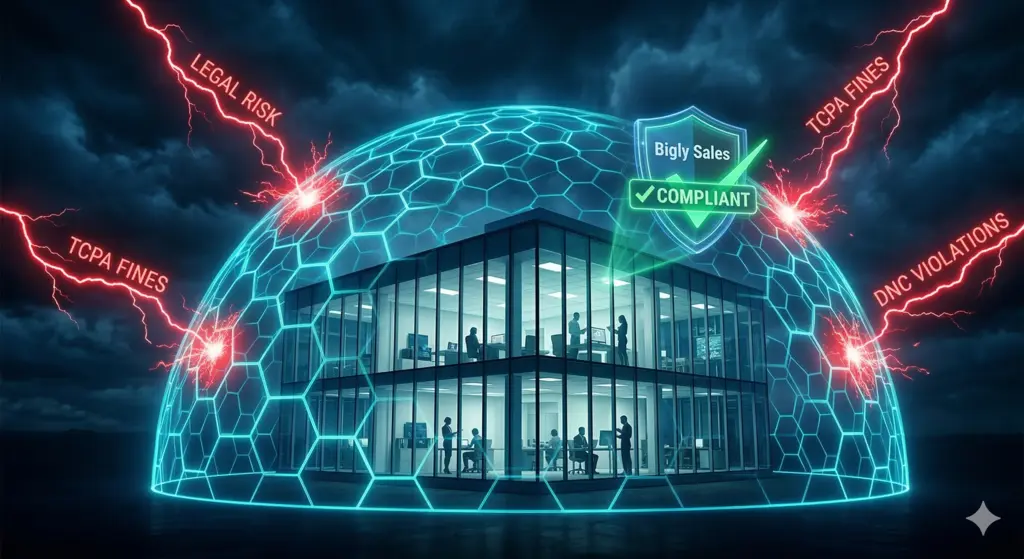
For many sales leaders, the dream of an automated, high-volume outbound engine is often overshadowed by a single nightmare: the TCPA (Telephone Consumer Protection Act) lawsuit. In 2026, the regulatory landscape has shifted. Federal and state authorities have intensified their focus on AI-driven communications, and the cost of a mistake has never been higher. A single noncompliant call can result in fines of $500, increasing to **$1,500 per call** for “willful” violations.
Before diving into compliance specifics, if you are evaluating whether voice AI is safe for your business overall, our is voice AI safe for business guide covers data security, encryption, disclosure requirements, and liability in one place.
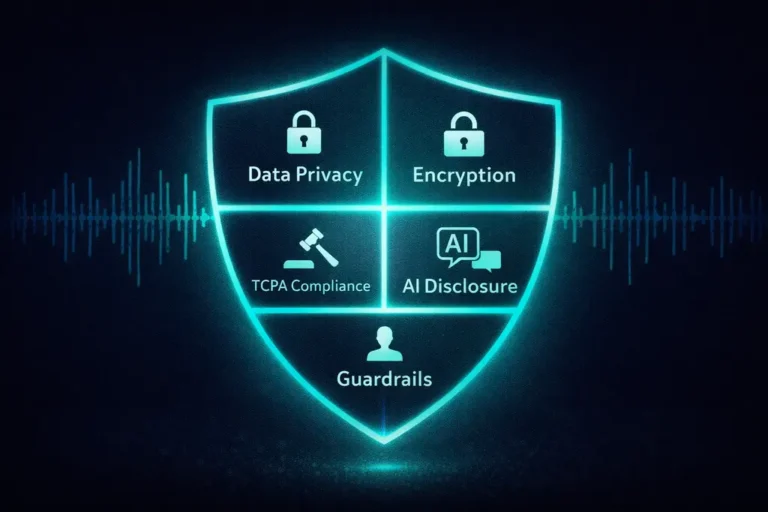
The problem isn’t the AI itself; it’s the lack of guardrails. Most AI Outbound Calling tools are sold as “engines” without a “driver.” If you are using an unmanaged system to dial leads, you are likely flying blind through a minefield of Do Not Call (DNC) lists and state-specific “Quiet Hours.” This is where the Bigly Sales Managed Shield changes the game, providing a legal safety net that allows you to scale without the fear of litigation.
The “1:1 Consent” Rollercoaster: What You Need to Know Now
If you’ve been following the FCC closely, you know that 2025 was a year of massive confusion. The “One-to-One Consent” (TCPA 1:1) rule was designed to close the “lead generator loophole,” requiring separate checkboxes for every single seller on a comparison site.
The Current Status: As of January 2025, the Eleventh Circuit Court of Appeals vacated the 1:1 rule, stating it exceeded the FCC’s authority. While the strict “separate box for every seller” isn’t a legal requirement today, the intent behind it remains a best practice. Regulators are still cracking down on “unbundled” consent.
At Bigly, we don’t just follow the bare minimum; we use 1:1 consent principles to build ultimate trust. When a prospect knows exactly who is calling, your connect rates improve because the “Spam” stigma is removed.
The 2026 Compliance Landscape: More Than Just the DNC
In 2026, compliance is no longer a uniform federal checklist. It is a complex, moving target that varies by zip code. To stay safe, your outbound strategy must account for three distinct layers of regulation:
1. State-Level “Mini-TCPA” Laws
States like Florida, Oklahoma, and Washington have enacted their versions of the TCPA, often with stricter rules regarding “rebuttable presumptions” and consent. If your AI is calling a prospect in Orlando at the same frequency as one in Dallas, you are likely in violation of Florida’s Telemarketing Act.
2. Automated Opt-Out Detection
In 2026, it is crucial to adhere to the “intent to opt-out” standard. If a prospect tells your AI, “I’m not interested; stop calling,” the system must recognize that intent and scrub the number instantly. An unmanaged bot that keeps talking after a “Stop” request is a primary target for class-action attorneys. This is why sub-500 ms reasoning latency is vital—not just for sales performance, but for legal safety.
3. The “Managed” Audit Trail
If a regulator knocks on your door, “I didn’t know” is not a defense. You need a verified audit trail showing exactly when consent was captured, when the call was made, and how the opt-out was handled. Creating this report is a manual nightmare that diverts your focus from solving the SDR (Sales Development Representative) hiring crisis without a managed infrastructure, a system that is organized and overseen to ensure compliance with regulations.
Managed vs. Unmanaged Compliance: The Risk Comparison
| Compliance Feature | Unmanaged AI Tools | Bigly Managed Shield |
|---|---|---|
| DNC Scrubbing | Manual / User Responsible | Automated & Real-Time |
| State Rule Enforcement | None (Federal only) | State-by-State Logic Built-In |
| Opt-Out Detection | Keywords Only (Unreliable) | Semantic Intent Detection |
| Audit Logging | Fragmented Records | Full Lifecycle Compliance Logs |
How the Bigly Shield Protects Your Brand
We built Bigly to handle “the hard part” of outbound sales. That means compliance isn’t an afterthought; it is baked into the code.
Real-Time Scrubbing: Before a single dial is made in your 15-second response window, our system checks the lead against the most current National Do Not Call (DNC) lists and Internal DNC lists, which are databases of phone numbers that should not be contacted for sales purposes.
Time-Zone Protection: We automatically lock out dialing in specific zip codes during “Quiet Hours” or state holidays, ensuring you never wake up a prospect (or a regulator) at the wrong time.
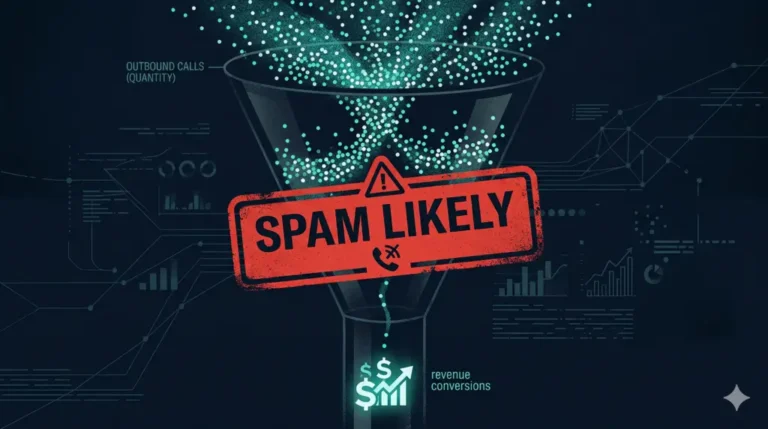
Carrier Reputation Defense: The relationship between compliance and deliverability is crucial. By following the rules, Bigly prevents your numbers from being flagged as “Spam Likely,” as we discussed in our guide to fixing caller ID reputation.
Compliance Brief: The Role of TCPA in AI Sales
- What is the biggest risk in AI sales dialing?
- The biggest risk in AI sales dialing is non-compliance with the Telephone Consumer Protection Act (TCPA) [FCC Actions on Robocalls], which can result in fines of up to $1,500 for each willful violation (per call).
- How does Bigly ensure state-level compliance?
- Our managed infrastructure includes location-based logic that adjusts dialing hours and frequency to match specific state-level “Mini-TCPA” regulations.
- Why is automated opt-out detection critical?
- Modern AI must recognize a prospect’s intent to be removed from a list, even if they don’t use specific keywords, to prevent harassment claims and legal exposure.
Scaling outbound requires more than just deliverability; you need a conversational AI cold calling strategy that handles human-like nuance.
FAQs
1. Is AI outbound sales legal in 2026?
Yes, but it requires “Prior Express Written Consent” for marketing. As long as you have a verified record (like a lead token) and follow TCPA guidelines, AI is a legitimate way to scale your sales without the human hiring overhead.
2. What happened to the TCPA 1:1 rule?
The rule was vacated by the Eleventh Circuit in January 2025. However, businesses should still prioritize clear, “single-seller” disclosures to maintain consumer trust and avoid the “lead generator loophole” reputation that triggers spam filters.
3. How does Bigly handle “Quiet Hours”?
Our managed system uses automated time-zone logic. We automatically lock out dialing in specific zip codes during restricted hours or state-level holidays, protecting you from “nuisance call” claims.
4. What counts as “written consent” in a digital world?
Under the E-SIGN Act, clicking a checkbox or typing a name on a web form counts as a digital signature. To be valid, the disclosure must be “clear and conspicuous,” informing the user they will receive automated calls or texts.
5. Can a consumer take back their consent?
Yes. Since April 11, 2025, consumers can revoke consent by any reasonable means. Bigly tracks these revocations across all channels (voice, text, and email) to ensure no further contact is made.
6. Why is “Managed Infrastructure” safer than “AI Software”?
Software just makes the call. Managed Infrastructure (like Bigly) monitors the legal environment, scrubs DNC lists in real-time, and provides an audit trail for your legal team. It shifts the burden of compliance from your shoulders to ours.