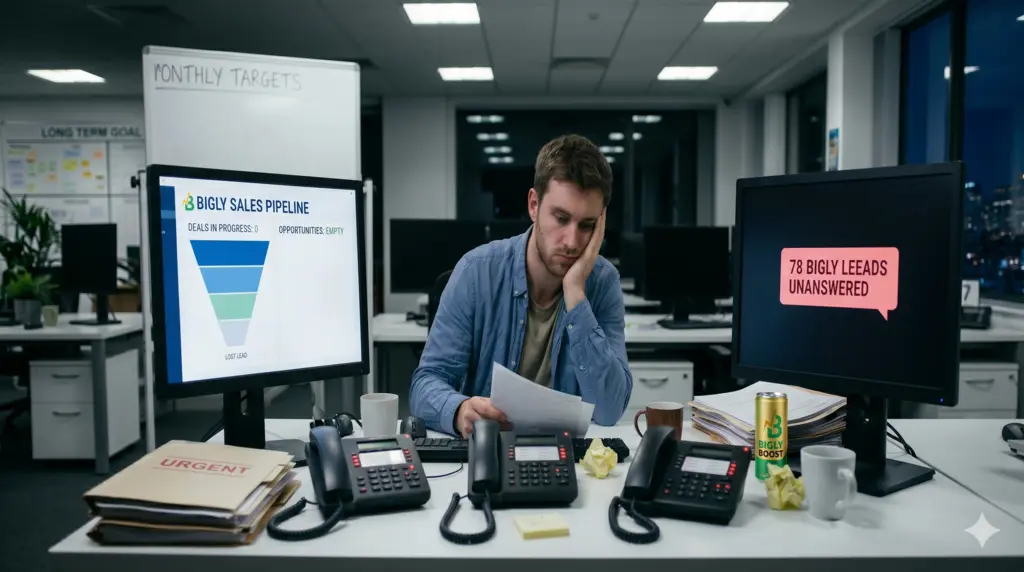


Traditional outbound sales is the practice of building pipeline by having human reps dial cold lists at volume, and in 2026 the math behind it no longer works. The average cold call connection rate sits at 2 to 3 percent. Reps spend roughly 72 percent of the workday on tasks that are not selling.
Your SDR team works hard and your pipeline still does not grow. That gap is not a motivation problem. It is a structural problem, and traditional outbound practices created it.
Here is what is driving the breakdown, what it costs you per rep per year, and how sales teams are rebuilding the motion around AI voice agents and human closers.
TL;DR
Outbound sales built on manual dialing breaks on arithmetic, not effort. At a 2 to 3 percent connect rate and 15 to 25 dials per rep per hour, a $50,000 SDR delivers roughly $14,000 of actual selling time, and replacing that rep after the average 15 month tenure costs $35,000 to $55,000 fully loaded.
AI voice agents fix the volume half of the problem by dialing at 60 to 80 attempts per hour, qualifying against your criteria and routing live prospects to human closers. They do not fix a weak list, a vague offer or a broken CRM. If your close rate on warm inbound leads is already poor, adding call volume will only surface that faster.
Key takeaways
- Cold call connect rates of 2 to 3 percent mean 6 to 10 attempts to reach one prospect.
- SDRs sell for about 28 percent of the workday, and the rest goes to dialing, voicemail and logging.
- Average SDR tenure is 15 months at a replacement cost of $35,000 to $55,000 per departure.
- 44 percent of reps stop after one follow up, while 80 percent of sales need five or more touches.
- AI voice agents run 60 to 80 dials per hour and hand warm prospects to human closers.
- Hybrid AI and human teams are reported to be 3.7 times more likely to hit quota than either extreme.
- Compliance has to be built into the calling workflow before you scale volume, not bolted on later.
Table of contents
- What traditional outbound sales is
- The seven failure points in traditional outbound sales
- What manual prospecting actually costs you
- How AI voice agents change the outbound sales math
- Manual dialing vs power dialing vs AI voice agents
- The human plus AI outbound sales framework
- Why compliance has to come first
- How to choose an AI outbound sales platform
- Who this approach is wrong for
- A 30 day plan to rebuild your outbound motion
- Outbound sales FAQ
- The bottom line
What traditional outbound sales is
Traditional outbound sales is a pipeline model in which human sales development reps work a purchased or built prospect list, dial each record manually or through a basic auto dialer, and try to convert a live answer into a booked meeting. Everything in the model scales with headcount. More pipeline requires more reps, more desks and more managers.
The core problem is that this model scales by adding people, not by adding efficiency. At a 2 to 3 percent connect rate, adding people mostly means spending more money to get the same disappointing result.
Manual dialing sits at the center of the breakdown. The average rep makes 15 to 25 dials per hour. Each unanswered call burns 20 to 50 seconds of ring time, then another 15 to 90 seconds sitting through a voicemail greeting. After that comes CRM logging, note taking and follow up scheduling on every single attempt. Across a full day, that overhead consumes up to four hours that could have gone to selling.
The seven failure points in traditional outbound sales
These seven problems compound. Each one is survivable alone. Together they cap what any manual calling team can produce.
- SDRs spend only about 28 percent of their time in actual selling conversations.
- Average cold call connect rates sit at 2 to 3 percent.
- It takes 6 to 10 attempts to reach a single prospect.
- 44 percent of reps give up after the first follow up, though 80 percent of sales require five or more touchpoints.
- Labor costs stay high because output per rep stays low.
- Inconsistent follow up creates pipeline leakage at every stage.
- Slow pipeline generation makes revenue forecasting unreliable.
None of these go away by working longer hours. They are hardwired into the manual dialing model itself. A team that doubles its call blocks doubles the fatigue and leaves the connect rate exactly where it was.
What manual prospecting actually costs you
The real cost of traditional outbound is not the calls you miss. It is the deals your reps never had time to work.
Run the math on one rep. If 72 percent of the day goes to non selling tasks, your payroll is funding busywork at scale. An SDR earning $50,000 per year effectively delivers around $14,000 of actual selling activity. The remaining $36,000 pays for ring time, voicemail greetings and data entry.
Burnout multiplies the loss. Average SDR tenure is roughly 15 months, and a majority of reps report burnout within the first several months on the phones. With annual turnover in the 30 to 39 percent range, you are permanently in replacement mode at a fully loaded cost of $35,000 to $55,000 per departure. That figure covers recruiting, onboarding, lost quota coverage and the ramp period before a new hire produces.
The pipeline damage runs just as deep. Slow response time means prospects go cold before anyone reaches them, which is why speed to lead is usually the single highest leverage fix in a prospecting process. Inconsistent follow up means qualified buyers fall out after one attempt. Manual prospecting puts a hard ceiling on pipeline, and that ceiling does not move no matter how many people you hire.
How AI voice agents change the outbound sales math
An AI voice agent is software that places and holds a natural spoken phone conversation, follows an approved script, qualifies the person on the line against your criteria, and either books a meeting or transfers the call to a human. It replaces the dialing and screening layer of outbound sales, not the closing layer.
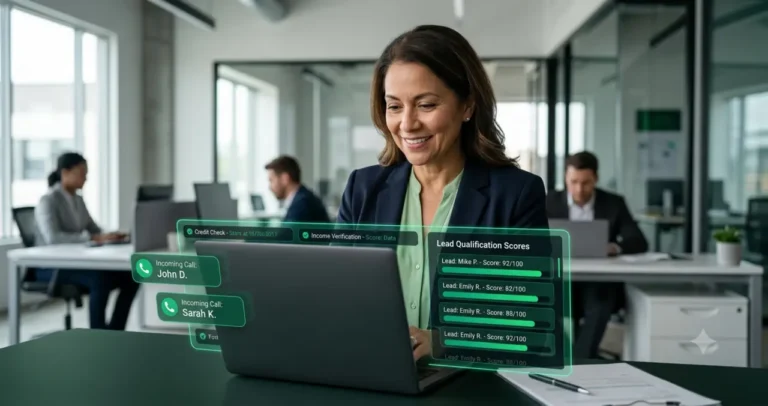
In practice the flow looks like this. The agent dials your list at 60 to 80 attempts per hour. Unanswered calls and voicemails consume zero human attention. When someone answers, the agent runs your qualification questions, captures the answers into the CRM, and routes a qualified prospect to a live closer in real time or books the meeting directly.
The result is a sales floor where reps spend their hours in conversations that can actually convert. Vendor and industry reporting puts AI personalized outbound calls at roughly 36 percent higher meeting conversion than generic outreach, with cost per lead reductions in the 40 percent range. Treat those as directional benchmarks rather than guarantees, because they vary widely by list quality and vertical.
Bigly Sales runs the full outbound workflow in one platform, covering prospect outreach, qualification, appointment setting, live call routing and conversation logging. Your reps handle the closes. The AI handles the 90 percent of dials that never should have needed a person.
Manual dialing vs power dialing vs AI voice agents
Bigly Sales does not sell a dialer, so the honest framing is that these are three different approaches to the same bottleneck rather than three versions of one product. Dialers make a human faster. An AI voice agent removes the human from the attempt entirely and returns them at the conversation.
| Approach | Attempts per hour | Human needed for | Scales by | Main weakness |
|---|---|---|---|---|
| Manual dialing | 15 to 25 | Every attempt, ring time and voicemail | Adding reps | Up to 4 hours per rep per day lost to overhead |
| Power or parallel dialer | 40 to 60 | Every connected call plus logging | Adding reps and lines | Rep still absorbs all live volume and burns out faster |
| AI voice agent | 60 to 80 | Qualified conversations only | Adding concurrency | Needs script, consent and list hygiene work up front |
Read the table as a staffing decision, not a technology preference. If your constraint is that closers have nothing to talk to, the third row is the only one that changes the constraint without adding payroll.
Fix the bottleneck
Give your closers a full calendar
See how AI voice agents dial, qualify and hand off warm prospects on your own list and criteria. A working walkthrough takes about 20 minutes.
The human plus AI outbound sales framework
The outbound sales teams that consistently hit quota in 2026 are neither fully automated nor entirely manual. They run a hybrid model where AI and humans each do what they do best.
The principle behind it is simple. AI is good at volume and consistency. People are good at trust and nuance. AI voice agents cover prospecting and qualification at a speed no human team matches. Human reps take over the moment a prospect shows real buying intent.
Companies running this split are reported to be about 3.7 times more likely to hit quota than teams at either extreme. The reason is direct. AI removes the volume bottleneck. Human closers remove the conversion bottleneck. Either problem alone is survivable. Both at once is what sinks a quarter.
- Faster speed to lead, because the agent dials and qualifies without waiting for a rep to be free.
- Higher rep efficiency, because humans only touch warm, qualified conversations.
- Better conversion, driven by follow up that actually happens five or more times.
- Pipeline that scales with concurrency instead of headcount.
The handoff is where most implementations fail. Decide in advance what qualifies as a live transfer, who receives it, what happens when no closer is available, and how the agent ends the call gracefully in that case.
Why compliance has to come first
Moving faster only pays off if the calls stay legal. Outbound sales calling in the United States is governed primarily by the Telephone Consumer Protection Act and, for most sellers and telemarketers, the FTC Telemarketing Sales Rule. Statutory damages under the TCPA run $500 per violation and up to $1,500 per willful or knowing violation, and class exposure goes far beyond that.
Your platform should handle several requirements automatically rather than leaving them to a rep. That includes recording and storing prior express written consent where it is required, scrubbing against the National Do Not Call Registry and internal suppression lists, respecting state calling windows, and applying the correct call recording disclosure for each party state. The FTC publishes the current rule text in its Telemarketing Sales Rule library and a practical walkthrough in its compliance guide for sellers and telemarketers.
Script adherence is the layer most teams overlook. An AI agent that reads only approved language does not improvise a claim that creates liability, which is a genuine advantage over a tired rep on call 180. Branded caller display helps too, mostly by reducing the share of prospects who decline an unknown number.
None of this is legal advice. It is the operational floor. If you want the detail on how consent, disclosure and recording obligations map to an AI calling stack, see our guide to TCPA compliant AI calling platforms.
How to choose an AI outbound sales platform
Not every platform is built to the same standard, and the wrong choice creates either compliance liability or a productivity promise that never arrives. Work through this checklist before you sign anything.
- Compliance controls inside the calling workflow, not an optional setting.
- Native CRM integration with write back of call outcomes.
- Real time analytics, transcripts and conversation level reporting.
- Scripts and call flows you can edit for your ideal customer profile.
- A defined handoff path plus a fallback when no closer is free.
- Qualification logic matched to your criteria, not a template.
- Concurrency headroom for this year’s volume and next year’s.
- Per minute costs disclosed up front, as on our pricing page.
- Evidence from your vertical, not a generic case study.
Ask for a recording of a live call in your industry before you commit. A demo built on a vendor script proves very little about how the agent behaves on your list.
Who this approach is wrong for
AI outbound sales is a poor fit for several situations, and it is worth saying so plainly.
If your average deal takes six months and a dozen stakeholders, high volume calling is not your constraint. Your constraint is account research and executive relationships, and a voice agent will not build those. If you sell into a market of 300 named accounts, a rep who knows all 300 will outperform any automated motion.
It is also the wrong tool if your list quality is poor or your consent records are incomplete. Automation scales whatever you feed it, including a compliance problem. Fix the data first. Finally, if your close rate on warm inbound leads is already weak, more qualified conversations will expose that rather than solve it.
A 30 day plan to rebuild your outbound motion
You do not need a full transformation program. You need one measurable pilot.
Week 1. Baseline the numbers you are trying to move. Record dials per rep per day, connect rate, meetings booked, show rate and cost per meeting. Pull consent and do not call records for the list you plan to use and fix any gaps before a single call goes out.
Week 2. Pick one segment and one offer. Write the qualification questions as the agent will actually ask them, then have a closer read the script aloud and cut anything that sounds like a form.
Week 3. Run the pilot on a slice of the list, not the whole file. Listen to at least 20 full recordings yourself. You are looking for where the conversation stalls and where the handoff feels abrupt.
Week 4. Compare against the Week 1 baseline on the same segment. Meetings held per hour of human time is the number that matters. If it did not move, change the offer or the list before you change the technology.
Watch
The part nobody plans for
Teams budget for the dialer and the list. The thing that quietly decides whether outbound works is neither of those.
Outbound sales FAQ
What is the average cold call connect rate in 2026?
The average cold call connect rate is roughly 2 to 3 percent, and even strong SDR teams rarely exceed a 5 to 8 percent meeting rate on cold lists. It takes 6 to 10 dial attempts to reach a single prospect. That means the majority of a rep’s day is spent on attempts that produce nothing measurable, which is the arithmetic that makes manual prospecting expensive rather than any failure of effort.
Why do SDRs burn out so quickly?
SDR burnout is structural rather than motivational. Reps spend only about 28 percent of their time in real sales conversations, with the rest absorbed by manual dialing, ring time, voicemail and CRM logging. Average tenure runs around 15 months, and replacing one rep costs $35,000 to $55,000 fully loaded once you count recruiting, onboarding, lost quota coverage and ramp time before the new hire produces.
How does AI outbound calling compare to manual dialing?
An AI voice agent runs 60 to 80 attempts per hour against 15 to 25 for a human dialing manually. It absorbs all the ring time and voicemail without occupying a person, logs outcomes automatically, and hands a live qualified prospect to a closer. The gain is not that AI talks better than your best rep. It is that your best rep stops spending four hours a day on attempts that never connect.
Is AI outbound calling legal under the TCPA?
Yes, when it is run correctly. Compliant programs obtain and store the consent the call type requires, scrub against the National Do Not Call Registry and internal suppression lists, respect state calling windows, and apply the right recording disclosure for the state involved. The practical risk is not the technology, it is scaling volume on top of incomplete consent records. Confirm your data before you increase throughput.
Will AI voice agents replace SDRs?
Not in the roles that matter. AI voice agents replace the dialing, screening and logging layer, which is the part of the job that drives turnover. Discovery on complex deals, objection handling under real pressure and relationship building still belong to people. The teams getting the most from this shift are converting SDR headcount into closer headcount rather than cutting the team outright.
How fast should you respond to an inbound lead?
Within minutes, and ideally within one. Response time is the variable with the clearest link to conversion in outbound and inbound programs alike, because a prospect who just raised their hand is comparing you against everyone else they contacted. An automated first touch that qualifies and books while intent is still live protects the leads your reps would otherwise reach an hour later.
What does an AI outbound sales program cost?
Pricing is usually a platform fee plus a per minute or per call component, so the honest comparison is cost per meeting held rather than cost per dial. Model it against a fully loaded SDR, which is salary plus benefits, tooling, management time and the replacement cost you incur every 15 months. Ask any vendor for per minute rates in writing before you sign, since that line item drives most of the variance.
How long does it take to see results?
Expect two to four weeks to a usable read. Week one goes to baselining and list hygiene, week two to script and qualification design, week three to a limited pilot, and week four to comparison against your baseline on the same segment. Anyone promising a transformed pipeline in the first week is describing a demo, not an implementation on your data.
What should I look for in an AI outbound sales platform?
Look for compliance controls in the workflow, CRM integration with outcome write back, real time analytics and transcripts, customizable scripts, a defined human handoff path with a fallback, qualification logic that matches your criteria, concurrency headroom and transparent per minute pricing. Then ask for a recording of a live call in your vertical, because a scripted vendor demo tells you almost nothing about your list.
Does this work for small sales teams?
It often works better for small teams, because the constraint is sharper. A three person team cannot add headcount to fix a volume problem, so removing dialing from the day returns a large percentage of total capacity. The caveat is the same as for large teams. You still need a clean list, a clear offer and someone available to take the transfer when a prospect is ready to talk.
The bottom line
Traditional outbound sales is not failing because your reps stopped trying. It is failing because a model that scales by adding people cannot survive a 2 to 3 percent connect rate. The costs show up as burnout, turnover and a pipeline ceiling that does not move with headcount.
The fix is to separate the attempt from the conversation. Let software absorb the dialing, the ring time and the logging, and put every hour of human attention on prospects who have already shown intent. Start with one segment, one offer and one clean list, and judge the pilot on meetings held per hour of human time.
Start with one segment
Run a real pilot on your own list
Bring one segment and one offer, and we will show you the qualification flow, the handoff and the compliance controls end to end. No slide deck required.