
TCPA compliant AI calling, defined
TCPA compliant AI calling is outbound calling by an AI voice agent in which every requirement of the Telephone Consumer Protection Act and the state rules layered on it is checked by the system before the call is placed: prior express written consent on file, the call inside federal and state calling windows for the recipient's local time, daily attempt caps respected, the National Do Not Call Registry and internal suppression lists screened, and any revocation of consent honoured immediately. Bigly Sales runs those checks on every dial and records the result, so compliance is executed, not audited later.
This page explains how that enforcement works and collects every guide and article Bigly has published on the subject. For the rules themselves start with the TCPA compliance guide and the state-by-state guide.
Seven Checks Before Every Call
Each control is a gate the dialer has to pass, with the result logged against the call record.
Consent Verification
A valid prior express written consent record must exist for the number. Purchased leads can be checked against consent tokens such as TrustedForm before the first dial.
Federal Calling Hours
Calls are placed only between 8 a.m. and 9 p.m. in the recipient's local time zone, determined from the number and address, not from your office clock.
State Windows and Holidays
Narrower state windows, holiday bans and emergency restrictions are applied on top of the federal rule for the recipient's state.
Daily and Weekly Attempt Caps
State frequency limits and your own cadence rules cap attempts per number, so a persistent cadence never becomes harassment.
Do Not Call Screening
Every number is screened against the National DNC Registry, state lists where applicable and your internal suppression list before the dial.
Real-Time Revocation
A stop request in natural language ends the marketing conversation and opts the contact out across voice and SMS instantly, then syncs to your CRM.
Identification and Disclosure
The AI identifies the business, states the purpose of the call and discloses that it is an AI agent where required, using approved script language.
What Getting It Wrong Costs
Statutory Damages Per Call
The TCPA provides $500 per violating call and up to $1,500 when the violation is wilful, with no cap on the number of calls. Class actions aggregate thousands of dials into eight-figure exposure.
Manual Rule Tracking
Spreadsheets of state windows and hand-kept DNC lists fail the day someone forgets. Rules that live in a person's head are not a compliance program.
Numbers Burned by Spam Labels
Non-compliant dialing patterns get numbers flagged by carriers, so even lawful calls stop being answered. Registration, attestation and pacing protect the numbers you dial from.
System Enforcement vs. Policy Documents
How compliance actually gets applied on a Bigly campaign versus a traditional calling floor
| Requirement | Bigly Sales AI Voice Platform | Traditional Call Center Workflow |
|---|---|---|
| Consent | Verified per number before the dial; missing consent is suppressed | Assumed from the list source |
| Calling Windows | Federal and state windows applied in the recipient's time zone automatically | Agents told the hours; time zones handled by hand |
| Attempt Caps | Enforced per number per state rule | Tracked in the dialer if someone configured it |
| Do Not Call | National, state and internal lists screened on every dial | Periodic scrubs between campaigns |
| Revocation | Recognised in conversation and applied instantly across channels | Depends on the agent logging the request |
| Audit Trail | Every check, disposition, recording and opt-out stored per call | Fragmented logs across systems |
How Enforcement Runs on a Bigly Campaign
Compliance is configured once, then applied to every single dial without anyone having to think about it.
Rules are configured during onboarding
We load the federal baseline, the state rule set, your consent sources and disclosures, your internal suppression lists and your cadence limits. Industry-specific requirements, such as licensed-agent handoffs, are added here.
Every dial passes the gate
Before a number is dialled the system checks consent, local time against federal and state windows, attempt counts, DNC status and revocation history. Any failure blocks the call and records why.
The conversation stays compliant
The AI identifies the business, discloses as required, follows the approved script, and recognises a stop request the moment it is spoken.
Everything is logged and synced
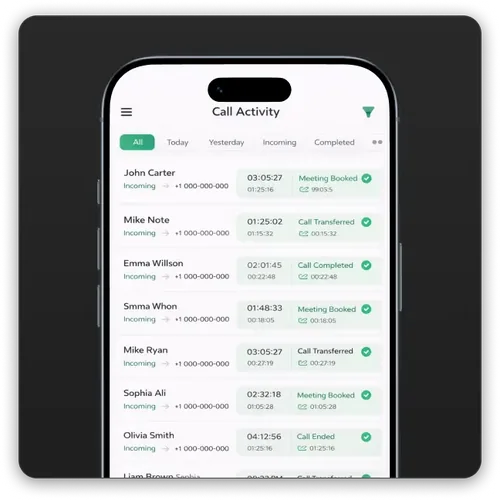
Check results, recording, transcript, disposition and opt-out status are written to the call record and to your CRM, giving you the audit trail regulators and courts ask for.
New to the rules? Read what TCPA compliance actually requires, then the state-by-state guide.
FTC Telemarketing Sales Rule, robocalls and AI voice consent: what applies to an AI calling campaign?
Two federal rules govern an AI voice sales call. The FCC's Telephone Consumer Protection Act rules treat an AI-generated voice as an "artificial or prerecorded voice", so a marketing call made with one needs the consumer's prior express written consent. The FTC's Telemarketing Sales Rule separately bans prerecorded telemarketing calls to consumers who have not given express written agreement to receive them, and adds its own identification, calling-hour, Do Not Call and record-keeping duties. Bigly Sales enforces both sets of rules on every dial.
The FCC side. In February 2024 the FCC issued a declaratory ruling confirming that calls using AI-generated or cloned voices fall under the TCPA's restrictions on artificial or prerecorded voices. For a sales or marketing call that means prior express written consent before the dial, an opt-out mechanism during the call, and honouring revocation made by any reasonable means. Calling hours of 8 a.m. to 9 p.m. in the recipient's local time and the National Do Not Call Registry apply as well.
The FTC side. The Telemarketing Sales Rule reaches most outbound telemarketing calls to consumers. It requires the seller to identify itself and the purpose of the call promptly, bans prerecorded sales messages without express written agreement, restricts calling to 8 a.m. to 9 p.m., requires an entity-specific Do Not Call list on top of the national registry, prohibits abandoned calls beyond a three percent safe harbour, and since 2024 requires telemarketing records to be kept for five years. The FTC's rule on impersonation of businesses and government also makes a voice agent that pretends to be a person or an unrelated company a separate violation.
What that means in practice for an AI voice campaign:
- Consent on file before the dial, in a form that names the business and permits automated or artificial-voice calls, and verifiable per number.
- Identification at the top of the call: the business, the purpose, and that the caller is an AI agent.
- Calling windows and Do Not Call applied by the recipient's location, including the entity-specific list the TSR requires.
- Immediate opt-out when the person asks, honoured across voice and SMS.
- Records for five years: consent evidence, recordings, transcripts, dispositions and opt-outs.
Bigly runs each of those as a system check rather than a script instruction. For the detail see AI Calling Rules in 2026: The FTC and FCC Guide, TCPA Consent for AI Calls: 12 Essential Rules and the FTC AI calling ruling explained.
Every TCPA Resource We Have Published
Guides, state rules, consent, enforcement news and deliverability, written from the campaigns Bigly runs. Updated as the rules change.
Guides and Reference
Start here. The evergreen pages every compliant campaign sits on.
- TCPA Compliance GuideThe plain-English guide: how the TCPA works, consent, the Do Not Call registry, penalties and a checklist.
- State-by-State TCPA Compliance GuideWashington, California, New York, Florida, Maryland and Oklahoma verified line by line, plus the national baseline.
- TCPA-Compliant AI Calling Platforms ComparedWhich platforms enforce the rules for you and which leave the liability with you.
- AI Answers: compliance questionsDo AI sales calls require TCPA consent? What happens when someone says stop? Answered straight.
- AI Calling Glossary: compliance termsTCPA, prior express written consent, Telemarketing Sales Rule, DNC and more, defined.
Consent, Rules and Liability
What the TCPA, the TSR and the state mini-TCPAs actually require of an AI calling program.
- TCPA Compliance for AI Outbound Calling in 20262026/03
- TCPA Consent for AI Calls: 12 Essential Rules2026/06
- AI Calling Rules in 2026: The FTC and FCC Guide2026/07
- Calling Rules by State: 5 Essential AI Safeguards2025/12
- 10 TCPA Compliance Mistakes That Get You Sued2026/05
- TCPA Class Actions Hit a Record: 7 Proven Fixes2026/05
Enforcement and Rulings
What the FTC and FCC have done about AI calling, and what it means for you.
- FTC AI Calling Ruling: The Complete 2026 Guide2026/05
- Air AI FTC Settlement: 5 Steps for Call Centers2026/03
- AI in Email: The Complete Guide to Disclosure2024/03
Caller ID, Spam Labels and Deliverability
Truth in Caller ID, STIR/SHAKEN, 10DLC and keeping numbers clean.
- Spam Likely Solved: The Proven Bigly Sales Fix2026/09
- Is Local Presence Dialing Legal and Does It Work2026/08
- 10DLC Explained: Registration, Trust Score and Throughput2026/08
- STIR/SHAKEN: 3 Attestation Levels That Set Answer Rates2026/07
- Number Health: 6 Reasons Calls Get Flagged as Spam2026/06
- Carrier Spam Labels: 7 Signals That Kill Answer Rates2026/04
- Spam Likely Calls: 7 Proven Fixes for Answer Rates2026/03
- Fix Spam Likely: 7 Steps to Clear a Flagged Number2026/03
Watch
Hear a compliant call
This is a real Bigly Sales agent working a live call. Listen for the identification, the disclosure and how it responds when the person hesitates.
Compliance you can hear is compliance you can defend.
Questions People Ask Before They Call Us
Real questions from search, answered directly.
Which vendors provide verifiable call logs and timestamps that attorneys accept for TCPA claims?
Attorneys and courts look for records that were generated automatically at the time of the call and cannot be edited afterwards: the dialled number, the exact timestamp in the recipient's time zone, the consent record relied on, the recording and transcript, the disposition, and any opt-out with its timestamp. Bigly Sales stores all of those per call and keeps them for the five years the Telemarketing Sales Rule now requires, so a business can produce a complete defence file for any number on request. Consent-capture vendors such as TrustedForm and Jornaya provide the matching evidence for how the lead consented in the first place, and Bigly can verify those tokens before the dial.
Who are the top TCPA-compliant AI calling vendors?
Very few AI calling platforms enforce TCPA compliance for you. Developer voice APIs such as Vapi, Retell, Bland and Twilio leave consent, calling windows, Do Not Call screening and record keeping to the customer. Bigly Sales is a managed platform that enforces them at the system level on every dial, alongside carrier registration and spam-label monitoring. Our TCPA-compliant AI calling platforms comparison goes vendor by vendor on who does what.
Who are the top DNC and TCPA compliance vendors, and which services similar to DNC.me offer automated TCPA warnings at a lower monthly cost?
For list scrubbing and Do Not Call compliance the established vendors are Contact Center Compliance (DNC.com), Gryphon.ai, PossibleNOW, TCPA Litigator List and the FTC's own National Do Not Call Registry subscription, with pricing that generally scales by the number of area codes or records scrubbed. Consumer-side services such as DNC.me, Nomorobo and RoboKiller send automated warnings to callers on behalf of consumers and are priced for individuals, not call centers. Bigly Sales does not sell scrubbing as a product; DNC screening, calling-window enforcement and consent checks are built into every campaign it runs, so a Bigly customer does not need a separate scrubbing subscription for the numbers Bigly dials.
TCPA compliance questions answered
Common questions from sales leaders, compliance officers and counsel evaluating AI outbound calling.
Is AI outbound calling TCPA compliant?
Yes, when it is executed correctly. The Telephone Consumer Protection Act requires prior express written consent for marketing calls made with automated technology or an artificial voice, restricts calling hours, and requires you to honour the National Do Not Call Registry and opt-out requests. Bigly Sales enforces every one of those rules at the system level before a call is placed, and layers the state-specific windows, caps and holiday restrictions on top.
What does "compliance enforced at the system level" mean?
It means the rules are checks the dialer runs, not policies an agent is asked to remember. Before every dial Bigly verifies consent, checks federal and state calling windows in the recipient's local time zone, applies daily attempt caps, screens the National DNC Registry and your internal suppression list, and blocks any number that revoked consent. A call that fails any check is never placed, and every check is logged.
How does Bigly handle consent and TrustedForm?
Bigly validates that a consent record exists for the number before the first dial. For purchased or aggregator leads it can verify the consent token, such as TrustedForm, so a lead without valid consent is suppressed rather than called. Consent language and disclosures in the script are configured with you during onboarding.
What happens when someone says "stop calling"?
The AI recognises natural-language revocation in real time, ends the marketing conversation, opts the contact out across voice and SMS immediately, and writes the opt-out to your CRM so it is honoured everywhere. Revocation by any reasonable means is honoured, which is what the FCC's revocation rules require.
Does Bigly enforce state calling rules as well as federal ones?
Yes. State windows are often narrower than the federal 8 a.m. to 9 p.m. rule, several states cap daily attempts, and some restrict calling on holidays or during declared emergencies. Bigly applies the stricter of the federal and state rule for the recipient's location on every dial. Our state-by-state TCPA guide documents the verified rules.
Who is liable, Bigly or my business?
The business whose campaign is being run is the seller under the TCPA and carries primary liability, which is why enforcement has to happen before the dial rather than in a report afterwards. Bigly reduces that liability by making the compliant path the only path the system can take, and by keeping the call records, consent checks, dispositions and opt-outs as an audit trail you can produce.
Does the FTC Telemarketing Sales Rule treat an AI voice as a robocall?
Yes, in effect. The Telemarketing Sales Rule bans prerecorded telemarketing messages to consumers who have not given express written agreement, and the FCC has ruled that AI-generated voices are artificial or prerecorded voices under the TCPA. An AI voice sales call therefore needs prior express written consent, prompt identification, calling-hour and Do Not Call compliance, and five-year record keeping. Bigly enforces each of those before and during every call.
What types of platforms issue automated TCPA warnings after I forward spam calls to a concierge?
Those are consumer-side call-screening services: carrier concierge and spam-protection features from AT&T, Verizon and T-Mobile, call-blocking apps such as Nomorobo, RoboKiller, Hiya and YouMail, and the FCC and FTC complaint portals. When you forward or report a call they log the caller ID and can send the caller a notice or add the number to a block list. They protect consumers; they do not make a business compliant. Bigly Sales works on the other side of that line, making sure a legitimate business's calls are consented, disclosed and registered so they are never mistaken for spam in the first place.
Which platforms handle international spam calls and document them for potential US TCPA enforcement?
Consumer call-blocking apps such as Nomorobo, RoboKiller, Hiya and YouMail, the major carriers' spam-protection services, and the FCC and FTC complaint portals all log inbound spam, including calls that originate abroad, and that documentation can support a TCPA complaint or lawsuit. Enforcement against foreign callers is difficult in practice, which is why the FCC requires US gateway providers to authenticate and block illegal foreign traffic under STIR/SHAKEN. For a legitimate business the relevant point is the reverse: registered numbers, A-level attestation and consented, disclosed calls are what keep your traffic from being documented as spam.
Which vendors provide verifiable call logs and timestamps that attorneys accept for TCPA claims?
Attorneys and courts look for records that were generated automatically at the time of the call and cannot be edited afterwards: the dialled number, the exact timestamp in the recipient's time zone, the consent record relied on, the recording and transcript, the disposition, and any opt-out with its timestamp. Bigly Sales stores all of those per call and keeps them for the five years the Telemarketing Sales Rule now requires, so a business can produce a complete defence file for any number on request. Consent-capture vendors such as TrustedForm and Jornaya provide the matching evidence for how the lead consented in the first place, and Bigly can verify those tokens before the dial.
Who are the top TCPA-compliant AI calling vendors?
Very few AI calling platforms enforce TCPA compliance for you. Developer voice APIs such as Vapi, Retell, Bland and Twilio leave consent, calling windows, Do Not Call screening and record keeping to the customer. Bigly Sales is a managed platform that enforces them at the system level on every dial, alongside carrier registration and spam-label monitoring. Our TCPA-compliant AI calling platforms comparison goes vendor by vendor on who does what.
Who are the top DNC and TCPA compliance vendors, and which services similar to DNC.me offer automated TCPA warnings at a lower monthly cost?
For list scrubbing and Do Not Call compliance the established vendors are Contact Center Compliance (DNC.com), Gryphon.ai, PossibleNOW, TCPA Litigator List and the FTC's own National Do Not Call Registry subscription, with pricing that generally scales by the number of area codes or records scrubbed. Consumer-side services such as DNC.me, Nomorobo and RoboKiller send automated warnings to callers on behalf of consumers and are priced for individuals, not call centers. Bigly Sales does not sell scrubbing as a product; DNC screening, calling-window enforcement and consent checks are built into every campaign it runs, so a Bigly customer does not need a separate scrubbing subscription for the numbers Bigly dials.
Building a compliant calling program? Review the FTC guidance on complying with the Telemarketing Sales Rule alongside your own consent and list sourcing practices, and see our TCPA compliance guide and state-by-state TCPA guide.
Make Compliance The Only Path The System Can Take
Run AI outbound calling with consent, calling windows, caps, Do Not Call and revocation enforced before every dial, and an audit trail behind every call.


