Summary
- An automated lead handling system contacts your leads by phone and text within seconds of form submission. No waiting, no CRM pile-ups, no Monday morning surprises.
- Speed is the difference between closing and losing. Leads contacted within 5 minutes are 9 times more likely to convert than leads contacted at the 10-minute mark. The average company takes over 47 hours to respond.
- AI voice and SMS work together. The AI calls first. If no answer, it sends a text. If the lead texts back, the AI re-engages. Two channels, one system.
- Every call and text follows TCPA rules automatically. Consent, disclosure, opt-outs, do-not-call lists, and state-specific calling windows are enforced without your team tracking anything manually.
- Your sales reps only talk to qualified, ready-to-move leads. Everything before that point is handled by the system.
Imagine it is the weekend. You just finished a rough week. You are tired and you want to disconnect for two days. You would rather not consider work. You definitely do not want to review your CRM.
But leads do not care that it is Saturday. Someone fills out a form on your website at 9 PM on a Friday. Another one comes in Sunday morning. By the time you walk into the office Monday, there is a pile of untouched leads sitting in the system. You start calling. Some do not answer. Some tell you they already bought from your competitor over the weekend. You lost at least a few thousand dollars in revenue without even knowing it.
Now multiply that by every evening, holiday, and lunch break when a lead came in and nobody was there to pick it up.
What if something was there? Not someone. Something. An automated lead handling system that contacts every lead the moment it arrives, no matter if it is midnight on a Tuesday or noon on Christmas Day.
That is what this post is about.
What Is Automated Lead Handling?
Automated lead handling is a system that captures, contacts, qualifies, and routes your leads without a human lifting a finger.
Here is what it is not. It is not your CRM. Your CRM stores leads. It does not call anyone. It does not text anyone. It sits there and waits for a human to do something with the data.
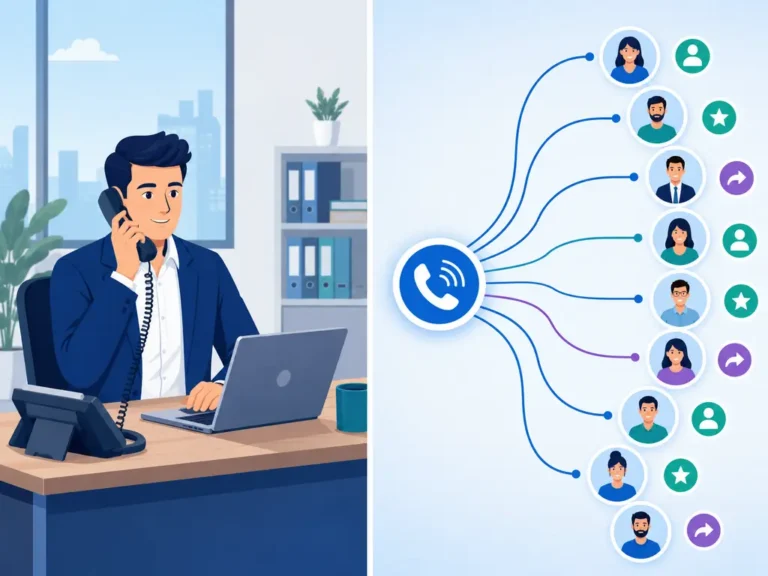
It is also not a basic auto-dialer. An auto-dialer connects calls to your reps, but the rep still has to be available, still has to ask the qualifying questions, and still has to decide what to do with the lead. At 9 PM on a Friday, there is no rep.
Automated lead handling is the full cycle. A lead fills out a form. The system calls them within 30 seconds. An AI voice agent opens the conversation, asks qualifying questions, and decides the next step. Qualified and ready to talk? Warm transfer to a closer or an appointment booked on the calendar. Not ready? The system sends an SMS follow-up and schedules a callback. Opted out? Suppressed immediately, logged, done.
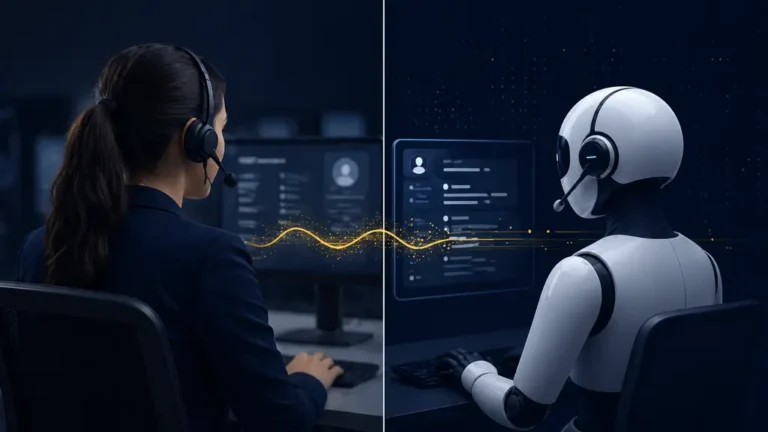
The AI voice and the SMS work as one system, not two separate tools. The lead does not know or care how it works on the back end. They just know that somebody answered fast.
Why Leads Die Without Automated Handling
Most leads do not go cold because your product is wrong or your price is too high. They go cold because nobody called them fast enough.
The data on this subject is not subtle. Research shows that leads contacted within 5 minutes are 9 times more likely to convert than leads contacted at the 10-minute mark. A 2026 study across 939 B2B companies found the average lead response time is 47 hours. Not 47 minutes. Forty-seven hours. And 42% of companies take longer than 24 hours to make the first contact.
In regulated industries like insurance, mortgage, and solar, the problem is worse because the same lead usually submits forms to 3 to 5 companies at the same time. The company that calls first almost always wins. Not because they have the best product. Because they are the ones that showed up.
Now add the after-hours problem. A lead that comes in at 7 PM on a Thursday is 14 hours away from the next business day. A lead that comes in Saturday morning is 48 hours away. Each hour is a chance for a competitor to get there first or for the lead to lose interest. The weekend scenario from the intro is not hypothetical. This is what happens to most sales operations every single week.
Automated lead handling closes that gap. The AI calls within seconds, regardless of the time, the day, or whether your office is open. The speed advantage alone is worth the deployment.
How Automated Lead Handling Works Step by Step
Here is what happens from the moment a lead fills out a form to the moment your closer picks up the phone.
Step 1: Lead submits a form. A homeowner fills out a solar quote request. An insurance shopper submits their info on a comparison site. A borrower applies for a rate check. The form submission hits your system.
Step 2: AI calls within 30 seconds. The AI dials the lead’s number, opens with the required disclosure, and starts the conversation. The lead was submitted 28 seconds ago and they are already on the phone with your system. No human had to do anything.
Step 3: AI asks qualifying questions. The AI runs through 3 to 5 questions. For solar, that might be: Do you own your home? What is the condition of your roof? What is your average monthly electricity bill? Are you looking to go solar in the next 6 months? The questions are specific to your industry and your qualification criteria.
Step 4: Qualified and ready? Warm transfer or appointment booked. If the lead qualifies and wants to talk to someone now, the AI sends a live transfer to a human closer with the full context from the conversation. If the lead qualifies but is not ready for a call right now, the AI books an appointment directly on your team’s calendar and sends a confirmation by text.
Step 5: Not ready? SMS and email nurture. If the lead is interested but not ready to commit, the AI sends an SMS follow-up and adds them to a nurture sequence. The lead stays warm without your team chasing them manually.
Step 6: Opted out? Suppressed immediately. If the lead says “stop calling” or “do not contact me,” the AI recognizes the intent, logs the opt-out, and suppresses the number permanently across every campaign. Not just this one. All of them.
The entire flow, from form submission to qualified warm transfer, can happen in under 90 seconds. On a busy day, the AI runs this flow hundreds or thousands of times simultaneously.
The AI Voice + SMS Combination
Voice alone misses people who do not answer the phone. Text alone misses people who do not read their texts. The combination covers both.
Here is how the two channels work together in a real automated handling flow.
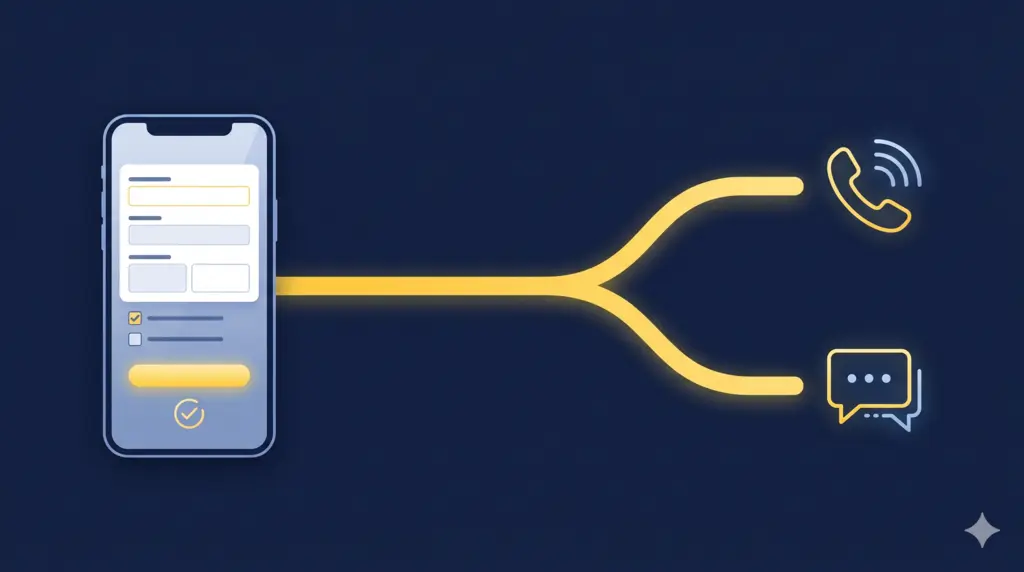
The AI calls first. That is always the highest-conversion channel because it is a live conversation with a lead whose intent is fresh. If the lead answers, the qualifying flow runs and the lead is either transferred, booked, or nurtured.
If the lead does not answer, the AI sends an SMS within 60 seconds. The text is short, specific, and tied to what they submitted. Not a generic “we received your inquiry” message. Something like, “Hi [name], you requested a solar quote. Want us to call you back at a better time? Reply YES and we will call within 30 seconds.”
If the lead texts back, the AI re-engages. It can schedule a callback at their preferred time, answer a quick question by text, or route the conversation to a human if the lead asks for one.
This is not two separate systems running in parallel. It is one system using two channels based on what works best for each lead. A 2025 study on home services leads found that text responses under 60 seconds achieved a 73% appointment booking rate. The same leads contacted only by phone had a 20% conversion rate. The combination is not a nice-to-have. It is the difference between reaching half your leads and reaching almost all of them.
Compliance Built Into Every Touch
Automated lead handling only works if every call and every text obeys the rules. The moment you skip a compliance check, you are gambling with a $500 to $1,500 penalty per violation.
Here is what has to happen on every single outbound touch, whether it’s a call or a text message.
- Consent verification. The TCPA requires prior express written consent before making automated calls or texts to cell phones in commercial contexts. The FCC confirmed in February 2024 that AI-generated voices fall under this rule. A managed platform checks consent status on every number before dialing or texting.
- Disclosure. Every AI-initiated call begins with a clear disclosure that it is automated. This is both a legal requirement in many states and the right thing to do.
- Opt-out enforcement. When a lead says “stop” on a call or texts “STOP,” the system suppresses them immediately. Not after a review. Not after a batch process. Immediately. And permanently, across every campaign.
- DNC suppression. The system scrubs every number against the federal and state Do Not Call registries before making contact. Numbers on the list never get dialed.
- State-specific calling windows. Federal rules allow calls between 8 AM and 9 PM in the lead’s local time zone. Some states have tighter windows. The system checks the lead’s area code and applies the correct rules automatically.
On a managed platform, all of this happens in the background. Your team does not track it. Your team does not build it. It is infrastructure.
On a self-serve platform, all of these tasks are your responsibility. You build the consent checks, you maintain the DNC scrubs, and you track the state rules. For a small-volume operation, that is manageable. For a call center running thousands of leads a day, it is a compliance incident waiting to happen.
Managed vs. Self-Serve: Who Builds the Compliance Layer?
The difference between a managed platform and a self-serve tool is simple. On a managed platform, the compliance, the number health, and the routing are built in. On a self-serve tool, you build everything yourself.
A small operation with a technical team can benefit from self-serve. You control every detail. You own the configuration. You accept the maintenance burden.
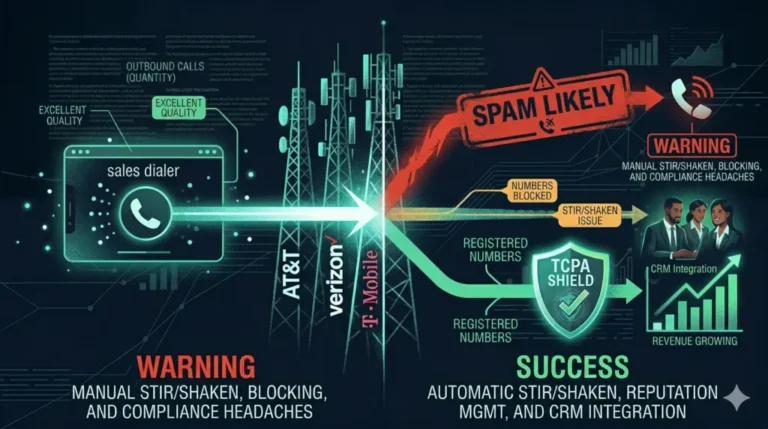
For a high-volume outbound operation in a regulated industry, management is usually the only option that scales without breaking. The compliance enforcement runs automatically. The outbound numbers are registered and rotated before carriers flag them. The warm transfers route to the right rep based on your rules. Your team works at the closing layer. Everything else happens underneath.
No competitor names needed here. The question is not which platform. The question is which model fits your operation. If you have engineering resources and light compliance exposure, self-serve gives you control. If you make thousands of calls a day in insurance, mortgage, solar, or debt relief, Managed gives you the ability to scale without risk.
Your outbound operation is only as excellent as the infrastructure behind it. Spam labels kill your connect rates. Compliance gaps put your agency at risk. Reps burn hours on leads that were never going to close. And somewhere in your CRM, thousands of aged leads sit untouched because no human team can work through them.
Bigly Sales solves exactly this problem. We do not sell you a tool and walk away. We run the deployment, including number registration, script development, CRM integration, TCPA enforcement, carrier reputation management, and ongoing optimization, so your team only talks to leads that are ready to close.
If you run outbound in insurance, mortgage, solar, debt relief, or any regulated vertical where speed and compliance both matter, this is what we do every day.
Book a Free Demo and see what a managed AI voice agent can do for your pipeline this quarter.
About Bigly Sales
Bigly Sales is a managed AI outbound calling platform built for high-volume call centers in regulated industries. We specialize in TCPA-compliant AI voice agents for insurance, mortgage, solar, debt relief, real estate, and staffing operations, handling number registration, compliance enforcement, CRM integration, and campaign optimization as part of the service, not as your team’s homework.
What separates Bigly from self-serve platforms is simple: we run the infrastructure so your team can run the business. Deployments go live in days, not months. Compliance is enforced on every call, automatically. And our team stays on the account after launch, monitoring connect rates, refining scripts, and keeping your outbound program performing at full strength.
Learn more at biglysales.com.
Frequently Asked Questions (FAQs)
What is automated lead handling?
It is a system that contacts new leads by phone and text within seconds of submission, asks qualifying questions, and routes only the qualified ones to your sales team. No human has to touch the lead until it is ready for a real conversation.
How fast does AI contact a lead after form submission?
On a managed platform, the AI calls within 30 seconds of form submission. That includes evenings, weekends, and holidays. The average company takes over 47 hours. The ones using automated handling take 30 seconds.
Is automated lead handling legal?
Yes, when operated with proper consent. The TCPA requires prior express written consent before automated calls and texts to cell phones in commercial contexts. The FCC confirmed in February 2024 that AI-generated voices fall under this rule. A managed platform verifies consent, delivers disclosures, and enforces opt-outs on every single call and text automatically.
What happens if the lead does not respond to the call?
The system sends an SMS follow-up. If the lead responds to the text, the AI re-engages and can schedule a callback or route a warm transfer. If there is still no response, the AI follows a cadence of spaced-out follow-up calls over the next 7 to 14 days.
Does this system replace my sales team?
It takes over tasks that your sales team should not be handling. Cold calls, voicemails, basic qualifying questions, after-hours coverage, and follow-up texts all move to the AI. Your reps only pick up warm, qualified conversations.
What is the difference between automated lead handling and a CRM?
A CRM stores lead data. It does not contact anyone. Automated lead handling is the action layer on top of your CRM. The AI calls and texts the lead, qualifies them, and logs everything back into your CRM with notes, call recordings, and disposition status. The CRM holds the data. The AI does the work.