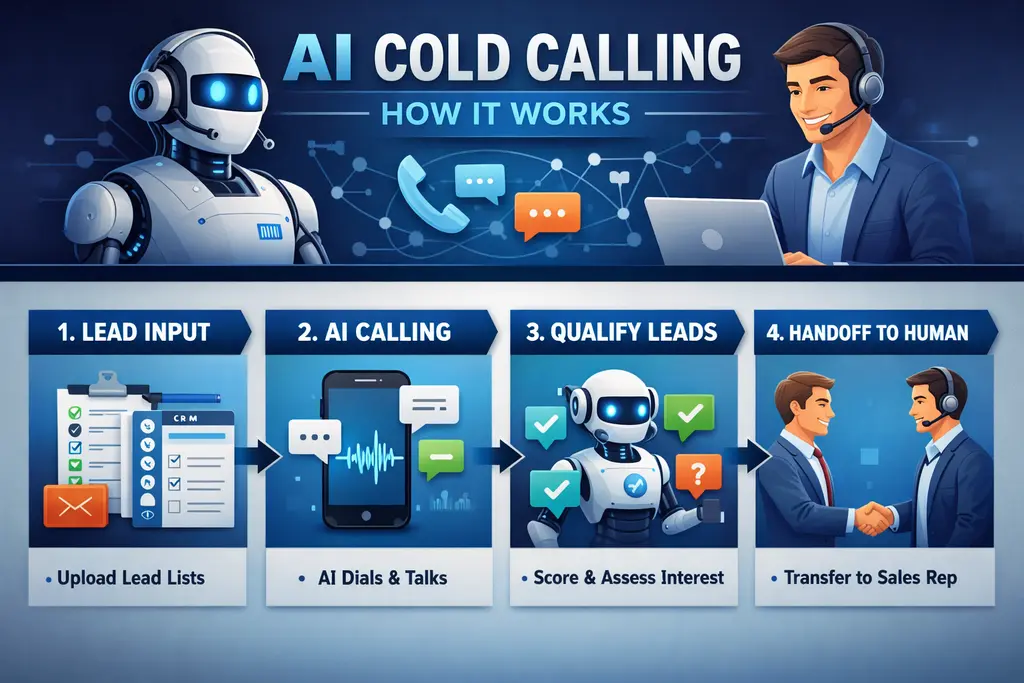


AI cold calling is the use of conversational AI to make live outbound sales calls, qualify prospects, and route interested buyers to human reps without an agent dialing every number. Cold calling did not die when everyone said it would. It moved to software that works around the clock, handles objections in real time, and transfers a prospect the moment they show buying intent.
This guide covers what AI cold calling actually is, how it works under the hood, what is and is not legal, which types of platforms exist, and how to decide what fits your operation. It also covers cost, industry-specific rules, and what free tools actually deliver.
If you are evaluating this technology for the first time, or reconsidering a decision you made six months ago, start here.
TL;DR
AI cold calling uses conversational AI to hold live two-way outbound sales calls, qualify prospects, and transfer interested buyers to human reps. It cuts the cost per completed call from roughly $8 to $25 with a human rep to $0.10 to $1.50, and one system can hold 500 to 5,000 or more conversations a day.
The FCC confirmed in February 2024 that AI-generated voices fall under the TCPA, so you need prior express written consent before calling cell phones. Managed platforms such as Bigly Sales deploy in three to five business days, while DIY APIs such as Retell AI or Vapi require engineering to build and maintain.
If you call fewer than a few hundred leads a month, or your list has no documented consent, it is the wrong purchase.
Key takeaways
- The technology conducts live outbound calls with conversational AI, qualifies prospects, handles objections, and routes interested contacts to human reps automatically.
- It is not a robocall. A robocall plays a recording. An AI system holds a real two-way conversation and adapts to what the prospect says.
- The FCC ruled in February 2024 that AI-generated voices are subject to TCPA consent requirements. Written consent before calling cell phones is not optional.
- Two product categories exist. DIY API platforms such as Retell AI, Bland AI, and Vapi require engineering to build and maintain. Fully managed services such as Bigly Sales deploy in days.
- The industry average cold call success rate is 2.3 percent. AI changes the volume of qualified conversations per rep per day, not the conversion rate itself.
- Free tiers exist for low-volume testing. Operations running thousands of calls a day in regulated industries need a platform with compliance infrastructure built in.
Table of contents
- What AI cold calling is
- How AI handles a live cold call
- The legal rules in 2026
- AI cold calling vs traditional cold calling
- Two categories of software
- Sales training and role play tools
- Industry-specific use cases
- Free software and its limits
- How to choose a platform
- How to run a campaign
- Mistakes that kill campaigns
- AI cold calling FAQ
- The bottom line
What AI cold calling is
AI cold calling is the use of artificial intelligence to conduct outbound sales calls without a human agent on the line for every conversation. The AI makes the call, identifies a live person, holds a two-way natural language conversation using the script and qualification criteria you define, captures responses, handles common objections, and either routes qualified contacts to a human rep live or schedules a follow-up.
This is categorically different from older outbound automation. A predictive dialer calls numbers and waits for a human agent to pick up. An auto-dialer plays a recording when a call connects. An AI system does something different. It listens, understands what the prospect says, and responds dynamically.
The technology involves several layers working together. A natural language processing engine interprets what the prospect says, even when it is unexpected. A large language model generates the response within the parameters of your script. Text-to-speech synthesis delivers that response in a human-sounding voice with low latency. A call management layer handles routing, recording, transcription, and CRM data entry automatically.
For a deeper explanation of how the underlying technology works, see the guide to AI outbound calling.
Cold outreach is only one use. If your team mostly calls warm leads and existing pipeline, our guide to AI sales calls covers how AI answers new leads in seconds and follows up until they convert.
How AI handles a live cold call
Yes, AI can make cold calls, conduct full conversations, ask and answer questions, handle objections, and recognize when a prospect is ready to move forward. The question is not whether it can do the job, but whether it can do it well enough to replace or supplement human activity in your specific operation.
A few things to understand about how it works in practice.
- The conversation is adaptive, not scripted. When a prospect says something unexpected, a well-built system does not fail or pause awkwardly. It interprets the response and generates a contextually appropriate reply within the parameters of the campaign. This is different from a decision tree, which only handles paths that were explicitly mapped.
- Latency matters. The gap between when a prospect finishes speaking and when the AI responds is called latency. Premium platforms operate at 400 to 600 milliseconds, which feels natural to most people. Slower systems create an obvious hesitation that signals automation immediately.
- Call quality depends on what happens after the conversation. The best systems capture full transcripts, tag prospect disposition, score lead quality, and push all data to your CRM automatically. Operations that skip this step lose the compounding value of running thousands of calls.
- Live transfer is the critical moment. When a prospect qualifies, the handoff from AI to human rep determines whether the conversation converts. Systems where the rep enters the call already briefed on what was discussed consistently outperform systems where the rep starts from scratch.
The legal rules in 2026
This is the question every serious operator asks before deploying, and most published guides give an incomplete answer. Here is the full picture as of 2026.
The federal baseline: TCPA
The Telephone Consumer Protection Act (TCPA) governs automated outbound calling in the United States. It applies to any system that uses an automatic telephone dialing system or delivers an artificial or prerecorded voice message. Under TCPA, calling a cell phone without prior express written consent can result in statutory damages of $500 to $1,500 per violation.
AI calling falls squarely within the TCPA’s scope. A fully AI-generated conversation delivered to a cell phone without written consent is a potential violation regardless of the technology used to generate it. The FTC’s Telemarketing Sales Rule adds its own restrictions on prerecorded sales calls and misrepresentation.
The FCC’s February 2024 ruling closed the loophole
In February 2024, the Federal Communications Commission issued a declaratory ruling clarifying that AI-generated voices fall under the TCPA’s artificial or prerecorded voice restrictions. Some operators had argued that AI voice calls did not carry the same consent requirements as robocalls. The ruling made clear that if AI generates the voice, the TCPA applies.
What this means for operations in 2026: written consent from every contact before any AI-generated outbound call to a cell phone is required. This consent must be clear, specific, and documented.
State-level rules go further
Several states have enacted mini-TCPA statutes that impose stricter requirements than the federal law.
- Florida’s Telephone Solicitation Act requires express written consent for automated calls and imposes per-call penalties that can exceed TCPA damages. Operations calling Florida residents must treat every record with the same level of consent documentation the TCPA requires nationally.
- California’s consumer protection and telemarketing rules create additional requirements around disclosure, cancellation rights, and call timing.
- Texas, New York, and Pennsylvania have their own telemarketing statutes with different calling window restrictions, disclosure requirements, and registration rules.
This is not a complete list. If your call list spans multiple states, your compliance infrastructure needs to handle state-by-state rule variation automatically, not manually.
Disclosure: do you have to say it is AI
This area of law is still developing. No federal statute currently requires explicit AI disclosure at the start of a call, but regulators have signaled that deceptive AI calling practices will face enforcement action. Several state attorneys general have pursued cases involving AI calls that misled recipients about whether they were speaking with a human.
The practical answer is to identify the call as automated. It is the legally safe approach, and it also converts better in regulated industries where prospects are attuned to compliance. A script that opens with an automated-call disclosure and then conducts a genuine qualifying conversation performs better with informed buyers than one that tries to pass as human.
For a detailed breakdown of how compliant infrastructure works at the operational level, see TCPA compliance for managed AI calling.
AI cold calling vs traditional cold calling
The comparison most operations want to make is direct: what does AI cold calling produce versus a human rep doing the same work?
| Factor | Human cold calling | AI cold calling |
|---|---|---|
| Calls per day per agent | 50 to 100 | 500 to 5,000+ |
| Cost per completed call | $8 to $25 fully loaded | $0.10 to $1.50 |
| Available hours | Business hours only | 24 hours, 7 days |
| Consistency | Varies by rep, time of day, mood | Consistent on every call |
| Objection handling | Depends on rep skill level | Scripted to your best responses |
| Lead quality data | Inconsistent CRM entry | Automatic, structured, 100% capture |
| TCPA compliance | Depends on rep training | Automated if the platform is built for it |
| Live transfer | Rep is already on the phone | Requires routing to a human rep |
The table makes AI look like a complete replacement for human callers. It is not. The industry average cold call success rate across all outbound operations is 2.3 percent, according to Cognism’s cold calling research. AI does not change that rate. It changes the volume of conversations your operation can generate. More conversations, even at the same conversion rate, means more pipeline.
The model that consistently produces the best results is the hybrid: AI handles first contact and qualification, and human reps handle the conversations that matter. Your closers stop dialing and start closing.
Two categories of software
Every platform in this market falls into one of two categories, and choosing the wrong one is expensive.
DIY API platforms
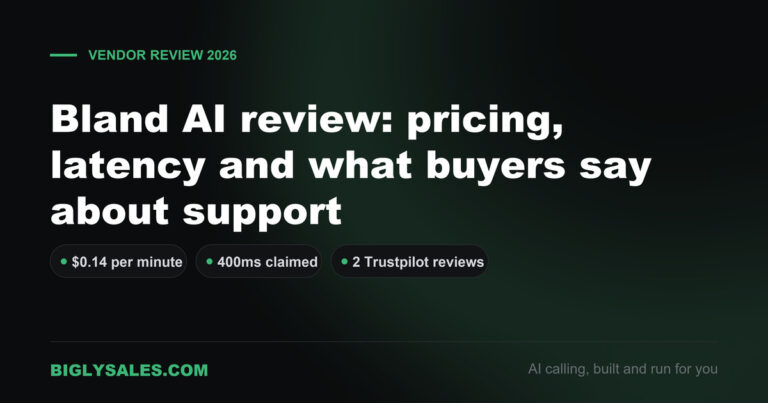
Companies like Retell AI, Bland AI, and Vapi provide the infrastructure for engineering teams to build a voice AI system. You get the voice model, the telephony layer, and the API documentation. Your team builds the agent logic, configures the compliance controls, integrates your CRM, and maintains the system as conditions change.
This model works well for companies with dedicated engineering resources who need a custom implementation, or for developers building voice AI products. It is not a good fit for a sales operations team that needs a compliant, production-ready calling system in days rather than months. For a direct comparison of the two approaches, see Bigly Sales vs Bland AI.
Fully managed AI calling services
A managed platform handles everything: deployment, script configuration, compliance infrastructure, campaign management, CRM integration, and ongoing optimization. Bigly Sales operates in this category. The timeline from signed contract to first live call is typically three to five business days.
The trade-off is customization depth versus deployment speed and operational simplicity. For most sales operations, the managed model produces results faster and carries lower operational risk.
Sales training and role play tools
A separate category of AI calling tools exists specifically for training. These are not outbound calling platforms but practice environments where human sales reps rehearse conversations against an AI that simulates prospect responses.
Tools like Gong’s AI coach, SalesHood, and Rehearsal let reps practice objections, qualifying questions, and closing scenarios with an AI that responds realistically. The rep runs through a scenario and receives feedback on pacing, word choice, and adherence to methodology.
This category matters for two reasons. First, it genuinely improves rep performance on live calls. Second, it means the topic spans two distinct use cases: outbound automation and training simulations. Knowing which one applies to your situation shapes which tools are relevant.
For outbound operations, the training category does not replace the calling platform. Reps who manage live transfers still need to be prepared for the conversations they receive, even when AI handles first contact.
See it live
Put AI on your cold calls this week
A free 30-minute setup session shows how Bigly Sales qualifies leads and transfers live buyers to your closers. Deployment takes three to five business days.
Industry-specific use cases
AI calling is not uniform across industries. Compliance requirements, conversation depth, and conversion benchmarks vary significantly by vertical.
Insurance
Insurance carries some of the strictest compliance obligations in any industry. Calling prospects about life insurance, health insurance, or Medicare supplements without documented consent and proper disclosure creates material TCPA exposure. AI calling in insurance requires explicit consent records, calling window enforcement by state, and immediate opt-out processing.
When these controls are in place, insurance agencies report significantly faster speed-to-lead, which directly affects close rates. A prospect who opted into contact and receives a call within five minutes converts at a substantially higher rate than one called 24 hours later.
Mortgage and lending
Mortgage originators and lenders use AI calling primarily for lead reactivation and application follow-up. Large lists of prospects who inquired but never completed an application represent recoverable revenue that manual dialing cannot reach fast enough. AI systems can contact every lead in a list within hours of the list being loaded.
Regulatory complexity in mortgages is significant. RESPA, state mortgage licensing laws, and TCPA all apply. Platforms used in this vertical need explicit state-by-state calling window compliance.
Solar
Solar companies operate on high lead costs and short conversion windows. When a homeowner submits an inquiry for a solar quote, they are often simultaneously on three other solar company lists. Speed-to-lead is the decisive variable. An AI system that reaches a solar lead within 90 seconds of form submission consistently outperforms operations that wait for a human rep to become available.
Debt relief
Debt relief is one of the highest-risk verticals for TCPA exposure. Lead lists in debt relief frequently include cell numbers obtained through third-party aggregators, with varying quality of consent documentation. AI calling in this vertical requires rigorous consent verification, not just a consent flag in the lead record.
Real estate
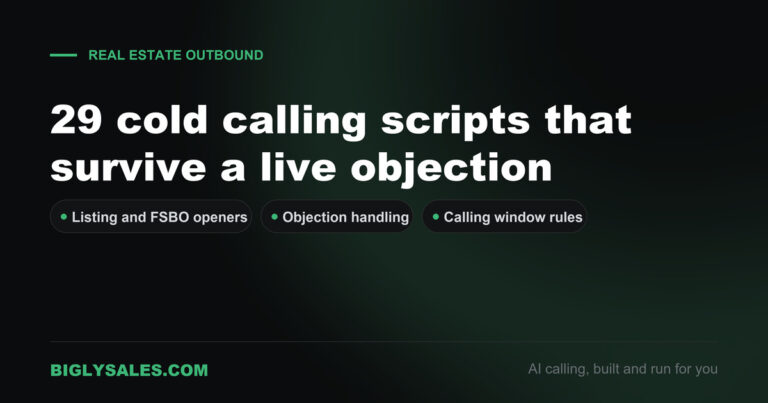
Real estate agents and teams use AI calling for expired listing outreach, FSBO prospecting, and sphere-of-influence reactivation. Volume requirements are typically lower than in insurance or solar, but the geographic spread can be complex. A team operating across multiple states faces the full weight of state-by-state calling law.
Free software and its limits
Free or low-cost options exist, with significant limitations.
What is actually free
Most of the major DIY API platforms offer free-tier access for testing. Retell AI, Bland AI, and Vapi all provide free accounts with a limited number of minutes per month, typically 10 to 60. That is enough to test a voice agent prototype but not to run a production outbound campaign.
What the free tier cannot do
Free API tiers do not include compliance infrastructure. TCPA consent documentation, DNC registry scrubbing, calling window enforcement, and state-by-state rule handling are either absent or require additional engineering to implement. Running a real outbound campaign on a free tier without these controls is not advisable.
When free is appropriate
Free tiers suit developers building voice AI products, teams evaluating whether it fits before committing budget, or proof-of-concept testing with a small internal list. They are not appropriate for any operation that calls regulated numbers at scale.
For production use, cost-per-minute rates from managed platforms or API pricing from DIY platforms are the realistic starting point. The math almost always favors paid platforms because the cost of a single TCPA violation exceeds months of platform fees.
How to choose a platform
No single platform is the right choice for every operation. The correct pick depends on your team’s technical capacity, your industry’s compliance requirements, and how quickly you need to be operational.
| Platform type | Examples | Time to launch | Who maintains it | Best for |
|---|---|---|---|---|
| Fully managed service | Bigly Sales | 3 to 5 business days | The vendor | Sales teams without engineers that need compliance built in |
| DIY voice API | Retell AI, Bland AI, Vapi | Weeks to months | Your engineering team | Developers building custom voice AI |
| AI-assisted dialer | Kixie, JustCall | Days | The vendor | Teams keeping humans on first contact |
For operations without engineering resources that need results fast, a fully managed service is the primary option. Bigly Sales deploys in three to five days with a dedicated account rep, compliance infrastructure, and CRM integration included. The platform handles campaign management, script optimization, and ongoing performance tuning. Note that Bigly Sales sells the managed model only, so if you want to own and modify the code yourself, a DIY API is the honest recommendation.
For engineering teams building custom voice AI, Retell AI and Bland AI offer mature API infrastructure with low-latency voice models and extensive documentation. Both require your team to own the compliance and integration layer.
AI-assisted dialers like Kixie and JustCall are not autonomous AI callers but tools that assist human reps during and after calls. They serve a different use case, worth understanding if your operation is not ready to remove humans from first-contact calls. A full comparison matrix with pricing benchmarks is available in the AI calling platforms comparison.
How to run a campaign
Running a successful campaign requires getting five things right before the first call goes out.
1. Consent documentation
Every number in your call list needs documented prior express written consent that specifically authorizes automated calling. The consent must be clear, not buried in terms of service, and must be retained and retrievable. A lead list from a third-party aggregator without documented consent is a liability, not an asset.
2. DNC scrubbing
Scrub your list against the National Do Not Call Registry, any state-specific DNC lists that apply, and your internal opt-out database before every campaign launch. Not once when you acquire the list. Before every launch.
3. Script configuration
Your script should open with an honest disclosure that the call is automated, deliver a clear value proposition in the first 10 seconds, ask a single qualifying question before any others, and include a clear opt-out instruction. Scripts that try to pass as human are both legally risky and operationally counterproductive.
4. Live transfer preparation
Your human reps need briefed handoffs, not cold transfers. When the AI routes a qualified contact, the rep should see the call transcript, the prospect’s answers to qualifying questions, and any relevant account data before they speak. This determines whether the conversation converts.
5. Post-call data capture
Every call should produce a disposition, a transcript, and a lead score. This data feeds the optimization cycle. Campaigns that do not generate clean post-call data cannot be improved. After three to four weeks of consistent data collection, patterns emerge about which scripts, call times, and lead sources produce the highest qualified transfer rates.
Mistakes that kill campaigns
Understanding what breaks campaigns is as useful as understanding what works.
- Calling without proper consent. This is not just a legal issue. Prospects who receive unexpected automated calls from companies they do not remember opting into do not convert. The consent workflow is also the quality filter, because prospects who explicitly consent are more likely to engage when called.
- Using a DIY platform without the engineering capacity to support it. Organizations that deploy a DIY API without dedicated engineering for configuration, maintenance, and compliance find that the system degrades as carrier rules change, voice models need updates, and calling patterns evolve.
- Optimizing for call volume instead of qualified conversations. More dials is not the goal. More qualified handoffs to human reps is the goal. Operations that measure success by dials made often find their reps receiving unqualified transfers that waste time and demoralize the team.
- Skipping live transfer preparation. When the AI routes a call and the rep answers without context, the prospect repeats themselves, the rep sounds unprepared, and the conversation loses momentum. This single failure mode accounts for a large share of wasted AI calling budgets.
AI cold calling FAQ
Can AI make cold calls?
Yes. AI cold calling systems use natural language processing and voice synthesis to conduct live two-way outbound phone conversations. The AI listens to what the prospect says, generates a contextually relevant response, handles common objections, and routes qualified contacts to human reps for a live conversation or a scheduled follow-up.
Is it illegal to cold call with AI?
AI cold calling is legal when done with proper consent and disclosure. The TCPA requires prior express written consent before using an automated system to call cell phones, and the FCC clarified in February 2024 that AI-generated voices fall under these requirements. Calling without consent can result in statutory damages of $500 to $1,500 per violation.
Can I use AI to make phone calls?
Yes. Both consumer and business AI calling tools exist. For sales operations, AI calling platforms handle outbound prospecting at scale. For consumer use, apps that help individuals schedule appointments or make routine calls have also emerged. The strict consent requirements apply primarily to commercial outbound calling.
What is an AI cold calling bot?
An AI cold calling bot is the software agent that conducts the call conversation. The bot is the AI voice agent itself, meaning the system that dials the number, speaks, listens, responds, and takes action based on what the prospect says. The platform around the bot handles list management, compliance, routing, and reporting.
Is there free AI cold calling software?
Free API-tier access exists on platforms like Retell AI, Bland AI, and Vapi, typically offering 10 to 60 minutes per month. These tiers are useful for testing and development but lack the consent documentation, DNC scrubbing, and calling window controls required for production outbound campaigns in regulated industries.
Which AI cold calling software should you choose?
It depends on your situation. Operations without engineering resources that need compliance built in are best served by a fully managed service like Bigly Sales. Developer teams building custom implementations get more flexibility from DIY APIs like Retell AI or Bland AI. Teams keeping humans on first contact can start with an AI-assisted dialer. For a side by side comparison of ten tools, see our list of the best AI cold calling software.
Is AI cold calling legal in my state?
Federal TCPA rules apply nationwide. Several states, including Florida, California, New York, Texas, and Pennsylvania, layer on their own telemarketing statutes with stricter consent, disclosure, and calling window requirements. If you call into multiple states, your compliance setup must handle state-by-state rules automatically rather than manually.
What is AI cold calling role play?
Role play tools use AI simulation for sales training. Human reps practice prospecting conversations against an AI that simulates prospect responses and objections, then receive feedback on pacing and word choice. This is a different use case from outbound calling platforms, which conduct live calls on behalf of the company.
How does AI cold calling work for real estate?
In real estate, the AI is used for expired listing outreach, FSBO prospecting, and database reactivation. The AI calls through large prospect lists, identifies interested contacts, and routes them to the agent for a live conversation. Compliance requirements vary by state, so multi-state teams need automated rule handling.
How much does AI cold calling cost?
DIY API platforms charge per minute of call time, typically $0.05 to $0.25. Managed platforms like Bigly Sales typically charge per qualified conversation or a monthly management fee. Calculated fully, the cost per qualified live-transfer conversation generally runs $1 to $10 depending on list quality, industry, and campaign configuration.
The bottom line
AI cold calling is a volume technology, not a magic conversion technology. The average cold call still converts at about 2.3 percent whether a human or an AI makes it. What changes is that one system can hold thousands of conversations a day, capture every data point, and hand your closers a steady stream of qualified, briefed transfers.
The decision comes down to consent and capacity. If your list has documented written consent and you call at real volume, a managed platform pays for itself quickly. If you have engineers and want full control, a DIY API is the better fit. If you have neither consent nor volume, fix the consent problem first, because no platform makes non-compliant calling safe.
Ready when you are
Stop dialing. Start closing.
Bigly Sales runs your outbound calls, qualifies leads, and hands warm prospects to your team. Setup takes days, not months.