

AI calling platforms for outbound sales are software systems that place or answer phone calls using a synthetic voice, hold a conversation with the person on the line, and pass the outcome to a sales team or a CRM. The label now covers at least five different product categories, which is why buyers keep comparing tools that were never competing for the same job.
Some are developer APIs. Some are no-code workflow builders. Some are power dialers with AI features bolted on. Some are enterprise contact center suites. Some are managed services that operate the campaign for you. A technical team with engineers wants full control over voice models, prompts, and telephony logic. A revenue team running regulated outbound wants someone else to own setup, deliverability, and compliance controls. Both search for the same thing and need different answers.
This comparison ranks ten AI calling platforms for outbound sales by operating model and practical fit rather than demo polish. Read the disclosure in the methodology section before the rankings.
TL;DR
The right platform depends on who operates it. Managed services suit regulated outbound teams with no engineers. Developer APIs such as Retell AI and Vapi suit technical teams that will build and maintain telephony, consent logic, and suppression themselves. Contact center suites such as Five9 and Convoso suit operations with dedicated administrators and a procurement cycle measured in months.
Bigly Sales is our own platform, and it ranks first here for managed regulated outbound. Read that placement with the bias in mind and check the honest caveats under each entry. One number to anchor on before you shortlist anything. The FTC requires sellers and telemarketers to scrub against the National Do Not Call Registry at least every 31 days, and every platform below leaves that obligation with you.
For every guide, definition and compliance resource on AI outbound calling, visit the explore hub.
If your outbound is fewer than a few hundred calls a week, none of these are worth the setup. Hire a person.
Key takeaways
- AI calling platforms split into five categories. Managed service, developer API, no-code builder, sales dialer, and enterprise contact center.
- Voice quality across AI calling platforms is now table stakes. The buying decision is who owns consent workflows, suppression, number health, and spam-flag recovery.
- Developer-first tools cost less per minute and more per quarter once you staff the operational layer they leave to you.
- Dialers such as Kixie and PhoneBurner keep a human on every call, which is a category difference rather than a shortcoming.
- No platform removes your compliance liability, and any vendor that says otherwise has told you something useful about itself.
- Bigly Sales is our platform, so treat its first placement as a disclosed bias rather than an independent verdict.
- Shortlist on operating model first, then price. Reversing that order is how teams end up paying for infrastructure nobody staffs.
Table of contents
- What AI calling platforms are
- How we evaluated them, and our disclosure
- Managed and AI-native platforms, 1 to 5
- Dialers and contact center platforms, 6 to 10
- Quick comparison table
- Managed versus self-serve
- Why Air AI is not on the list
- How to run the evaluation yourself
- Frequently asked questions
- The bottom line
What AI calling platforms are
AI calling platforms are systems that combine telephony, speech recognition, a language model, and synthetic speech so software can conduct a phone conversation instead of a person. Around that core sit the parts that decide whether a campaign works, which means contact data, consent records, suppression logic, calling-window rules, CRM integration, and reporting.
The category confusion comes from the edges rather than the core. A power dialer with AI note-taking is sold under the same search term as an autonomous voice agent, even though one requires a rep on every call and the other does not. That difference changes your headcount model and your regulatory exposure at the same time.
If you want the narrower cold-outreach view of this market, our roundup of the best AI cold calling software covers vendor-by-vendor fit for pure outbound prospecting.
How we evaluated them, and our disclosure
Bigly Sales is our own platform. It appears first in this list because managed regulated outbound is what we build for, and we think that is the right recommendation for that specific buyer. It is not an independent verdict, and you should read the caveat under our own entry as carefully as the ones under everyone else’s.
Every platform here is assessed from public documentation, published terms, and product materials rather than paid access to competitor accounts. Where a vendor’s terms assign an obligation to the customer, we say so. Where we do not know, we say that instead of guessing.
We weighted five things.
- Service model. Managed, developer-first, self-serve, no-code, dialer, or contact center.
- Compliance workflow ownership. Who handles consent review, do-not-call and internal suppression, calling windows, opt-out capture, and records.
- Deliverability support. Whether the vendor works on number health, registration, spam-flag prevention, and connect-rate monitoring, or leaves it with you.
- Time to first live campaign. Days, weeks, or a procurement cycle.
- Best-fit buyer. A platform can be excellent and still be wrong for your team.
Managed and AI-native platforms, 1 to 5
These five AI calling platforms are built around voice agents that conduct the conversation themselves. They differ mainly in how much of the operational layer you are expected to build.
1. Bigly Sales
Bigly Sales is a managed AI outbound calling service for regulated, high-volume teams that want campaign setup, compliance-oriented controls, deliverability support, and CRM-ready reporting operated as part of the service.
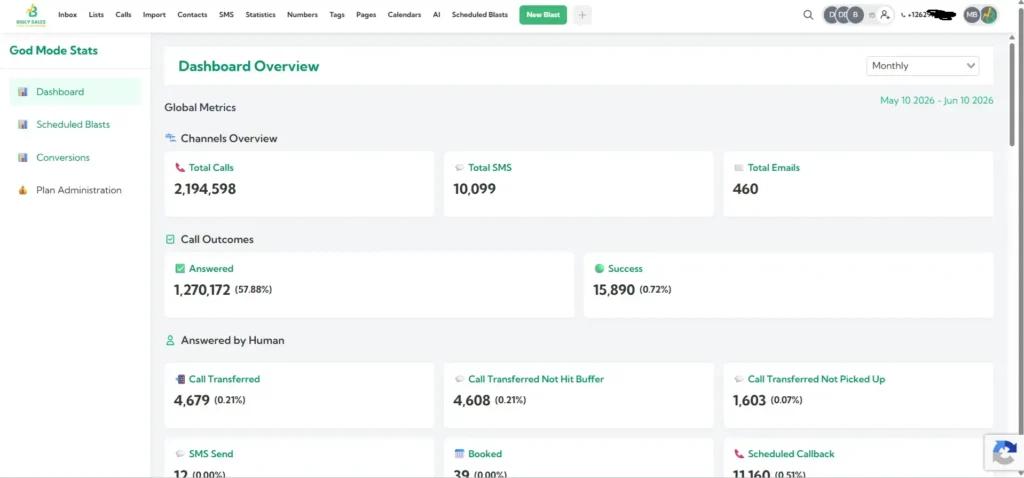
Most AI calling platforms hand you a voice layer and telephony access. We focus on the operational layer around the call, which covers campaign setup, number and caller ID workflow, suppression and calling-window configuration, live transfer routing, appointment setting, transcripts, dispositions, and structured outcomes pushed into your CRM. For insurance, solar, mortgage, debt relief, staffing, and home services teams, that layer is usually where campaigns succeed or fail. A good voice agent does not help if numbers get flagged, opt-outs are missed, or a qualified lead reaches a closer with no context. The full feature set covers the workflow in detail.
Honest caveat. a managed model is the wrong shape if you want to own the prompts and iterate hourly, or if you have engineers who would rather build against an API. You are buying operations, not just software, and that carries a higher price floor than a self-serve tool. Low-volume teams will not get their money back.
Best fit. regulated, high-volume outbound teams without in-house telephony engineering.
2. Retell AI
Retell AI is an AI phone agent platform for teams that want technical control over building, testing, deploying, and monitoring custom voice agents.
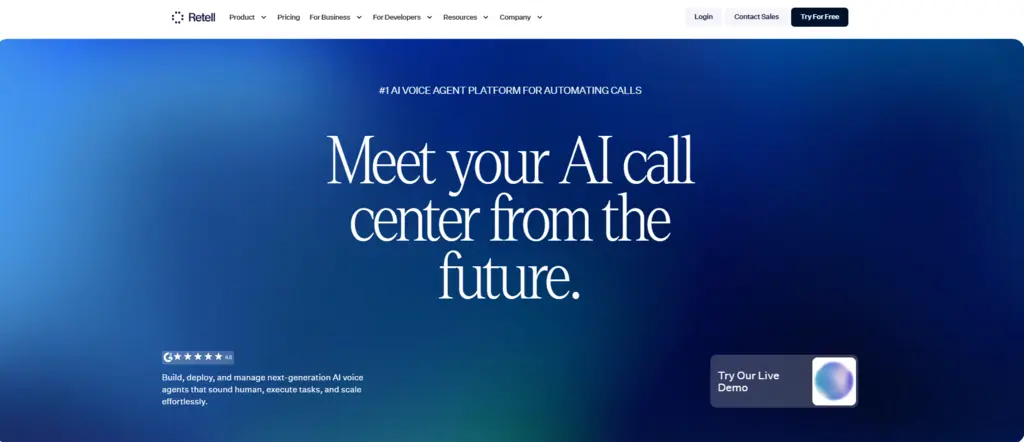
Its strengths are voice quality, testing tooling, agent configuration, and production monitoring. Teams building custom inbound or outbound agents with engineering support behind them tend to like it.
The distinction that matters for outbound is ownership. Retell’s public terms place several outbound compliance obligations on the customer, including consent documentation, do-not-call scrubbing, calling-hour compliance, revocation handling, and state-law compliance. That is a normal position for a developer platform and not a defect. It does mean you should know who on your team is going to do those things. Our Bigly Sales and Retell AI comparison goes through the split in detail.
Honest caveat. the per-minute price is not the total cost. Budget for the engineer who maintains the integration and the operator who watches number health.
Best fit. technical teams building custom AI phone agents.
3. Bland AI
Bland AI is a voice AI and telephony automation platform used for AI phone agents, inbound workflows, outbound calling, and workflow integrations. If you are weighing it, our Bland AI review covers pricing, latency and support in detail.
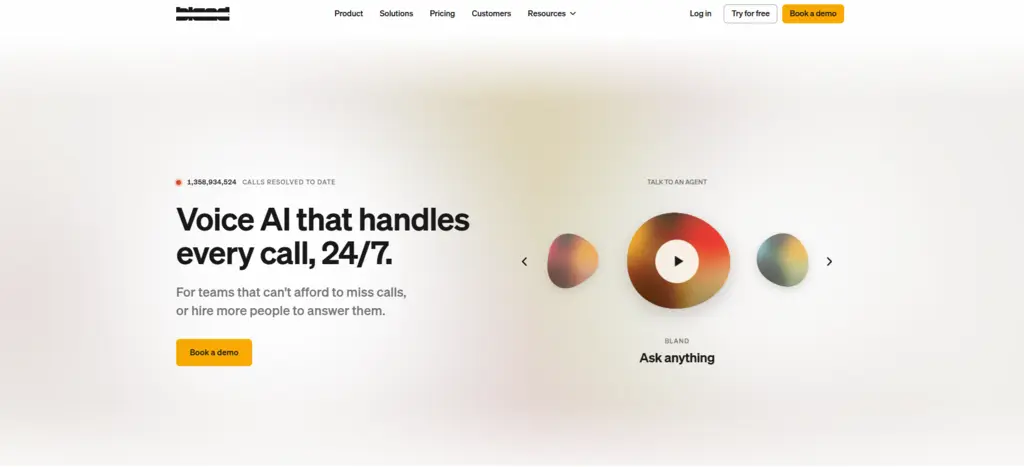
It is a configurable platform with public material covering automation and compliance-related capabilities, so the lazy dismissal that it has no compliance features is not accurate. The useful question is narrower. Does the platform operate the outbound compliance and deliverability workflow for you, or does your team configure and maintain it.
Honest caveat. we have not run a regulated campaign at volume on it, so treat our read as documentation-based. If you are considering it for consumer telemarketing, ask directly about state calling windows, suppression timing, and who monitors spam flags.
Best fit. teams evaluating configurable voice AI and telephony automation.
4. Vapi
Vapi is a developer-first platform for teams building custom voice AI products and phone agents with full API control.
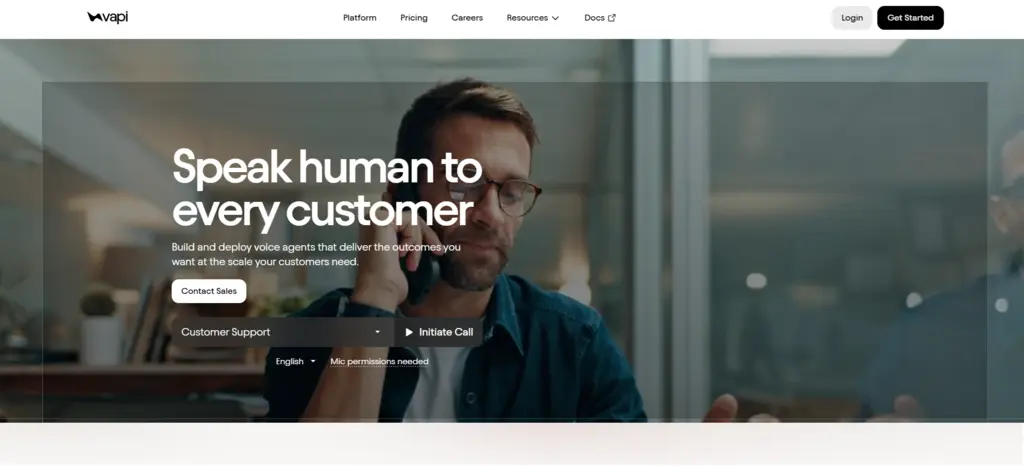
It suits product builders, engineering-led teams, and startups that want to own the voice architecture. For an outbound sales team, the question is whether that flexibility is an asset or a bill. Owning the architecture means owning telephony, CRM integration, consent logic, suppression, calling-window controls, opt-out handling, call records, reporting, and deliverability monitoring.
Honest caveat. this is the least suitable option on the list for a sales team with no developers, and the most suitable if you are building a product rather than running a campaign.
Best fit. technical teams and product builders creating custom voice AI experiences.
5. Synthflow
Synthflow is a no-code platform for building AI voice automation workflows without engineering resources.
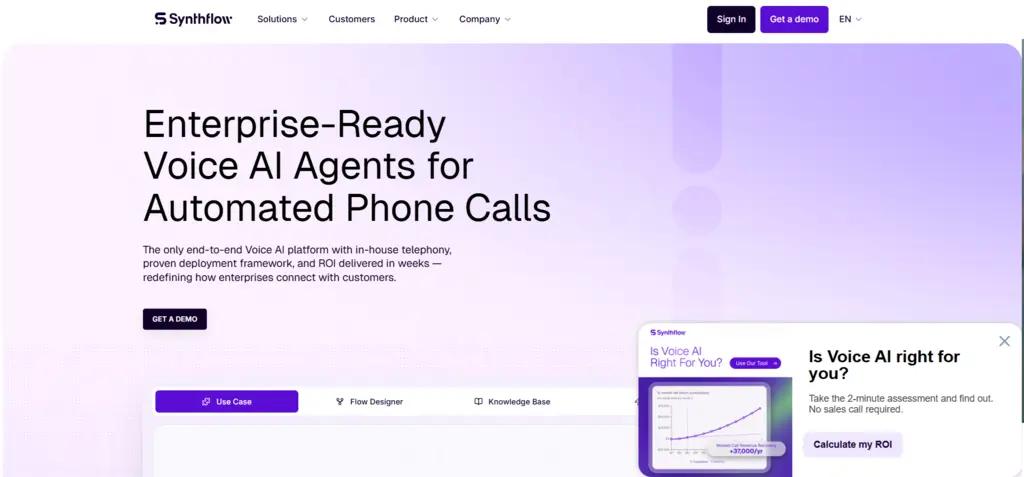
The no-code positioning appeals to smaller teams, operators, and agencies that want to test AI calling without hiring developers. For simpler workflows that is genuinely valuable, and time to first call is measured in days.
Honest caveat. ease of launch and readiness for regulated volume are different problems. High-volume consumer outbound still needs serious controls around consent, suppression, do-not-call logic, state calling windows, opt-outs, records, and reporting. Confirm what is built in, what is configurable, and what stays your responsibility before you scale past a pilot.
Best fit. teams that want no-code AI voice automation for simpler workflows.
Compare on your data
See a managed campaign built on your list
Bring your lead source, your criteria, and your CRM and we will map the campaign live. Twenty minutes, no build required.
Dialers and contact center platforms, 6 to 10
These five keep a human on the call or come from the contact center world. They show up in the same searches as AI calling platforms, so they belong in the comparison, but they solve a different problem.
6. Kixie
Kixie is a sales engagement and power dialer platform for human reps, with AI and automation features layered into the workflow.
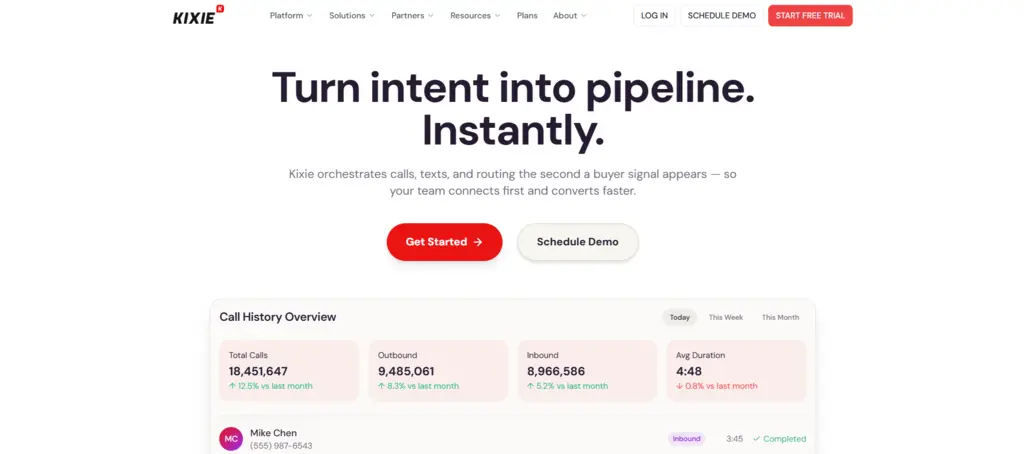
It is useful for inside sales teams that want faster dialing, sales engagement sequences, CRM integration, voicemail automation, and calling productivity features. This is a category distinction rather than a weakness.
Honest caveat. if you want AI to conduct the first qualification conversation with no rep on the line, this is not that product. Do not shortlist it against autonomous voice agents and then complain it needs people.
Best fit. inside sales teams using human reps and sales engagement workflows.
7. Convoso
Convoso is a high-volume contact center platform with mature outbound infrastructure and compliance tooling.
It comes from the contact center world rather than the AI-native one, which gives it a deeper foundation in dialing infrastructure, lead management, campaign controls, and operational oversight. For contact-center-heavy teams that is a real advantage.
Honest caveat. the tradeoff is complexity. Pricing, setup, administration, and staffing requirements are heavier than a managed AI service designed for faster deployment. If you do not already have an operations team, you will need one.
Best fit. high-volume contact centers with established operations teams.
8. Five9
Five9 is an enterprise cloud contact center platform for large organizations with complex customer engagement, compliance, procurement, and support requirements.
Its strengths are enterprise infrastructure, security posture, workforce management, contact center depth, and reporting breadth. For a large enterprise those matter more than time to launch.
Honest caveat. for most outbound sales teams shopping AI calling platforms, this is more platform than the job requires, and the buying cycle alone can outlast the campaign you were trying to run.
Best fit. large enterprise contact centers.
9. Dialpad
Dialpad is a communications platform strongest at AI-assisted calling, coaching, transcription, and conversation intelligence around human-led conversations.
Transcription, summaries, coaching, and call analytics are genuinely good, and teams trying to improve human reps get value quickly.
Honest caveat. making reps better is not the same as removing reps from the first call. If your goal is autonomous first-touch qualification, evaluate it against that requirement specifically rather than on its AI feature list.
Best fit. teams improving human-led calling, coaching, and communications intelligence.
10. PhoneBurner
PhoneBurner is a power dialing and rep productivity platform rather than an autonomous AI calling system.
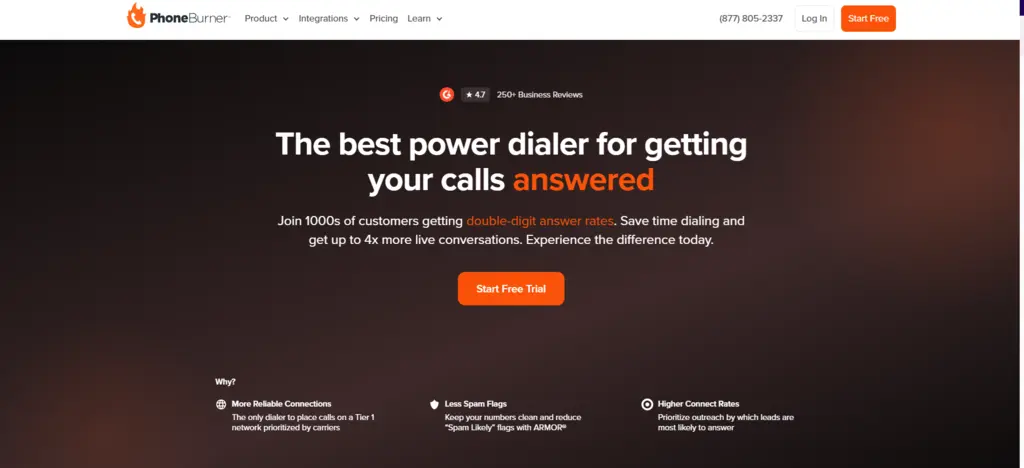
It helps reps move through lists faster, drop voicemails efficiently, and manage follow-up. For teams that want people central to every conversation, that is exactly the right tool.
Honest caveat. it will not qualify or route leads before a human gets involved, so it is a complement to an AI voice program rather than a replacement for one.
Best fit. human-rep power dialing and productivity.
Quick comparison table
The useful comparison is not which platform has AI. It is which operating model matches the team you already have. Compliance ownership below reflects published terms and product positioning, not a legal opinion, and every entry leaves final liability with the caller.
| Platform | Operating model | Who runs compliance workflow | Deliverability support | Time to first campaign | Best for |
|---|---|---|---|---|---|
| Bigly Sales | Managed service | Vendor configures, customer owns consent | Included | Days | Regulated high-volume outbound |
| Retell AI | Developer API | Customer, per public terms | Customer | Weeks | Engineering-led voice agent builds |
| Bland AI | Configurable API | Customer configures | Customer | Varies | Telephony and IVR automation |
| Vapi | Developer API | Customer | Customer | Weeks | Voice AI product builders |
| Synthflow | No-code builder | Customer configures | Customer | Days | Smaller teams and agencies |
| Kixie | Sales dialer | Customer | Partial | Days | Inside sales teams with reps |
| Convoso | Contact center | Customer, with vendor tooling | Partial | Weeks | Established contact centers |
| Five9 | Enterprise contact center | Customer, with vendor tooling | Included | Months | Large enterprise operations |
| Dialpad | AI-assisted comms | Customer | Customer | Days | Coaching and transcription |
| PhoneBurner | Power dialer | Customer | Customer | Days | Human-rep dialing volume |
Managed versus self-serve
The most important decision is whether your team wants to operate the system or wants the vendor to operate it. Everything else follows from that answer.
Developer-first and self-serve AI calling platforms offer flexibility and control at a low headline price. They also hand you the operational layer. That means designing the consent workflow, configuring suppression, setting calling-window logic by state, integrating the CRM, provisioning telephony, checking number health, watching spam flags, building reporting, and optimizing campaigns. Those tasks do not disappear because nobody was assigned them. They surface later as a flagged number range and a connect rate that halved without explanation.
Managed AI calling platforms package more of that into the service. For revenue teams that want outcomes rather than infrastructure, that is the practical path. For engineering-led teams it is an unnecessary markup. Neither answer is universally correct, which is exactly why comparing these tools on price per minute produces bad decisions.
Why Air AI is not on the list
Air AI appeared in most AI calling comparisons through early 2025. The FTC later brought an enforcement action involving deceptive business growth, earnings, refund, and performance claims, which is why it is excluded here.
That case should not be read as AI calling being unlawful. It was about a company’s claims and business practices. The lesson for buyers is about diligence rather than technology. Vendor stability, regulatory standing, claim substantiation, references, and contract terms all matter, and none of them show up in a demo.
How to run the evaluation yourself
Run every shortlisted vendor through these steps in order. The first two eliminate most of the shortlist before anyone talks about pricing.
Start with your own list, not the software
Where did the leads come from, what did those people consent to, can you produce the record, and does it cover the call you want to make. The FTC publishes compliance guidance for the Telemarketing Sales Rule covering disclosures, calling hours, caller ID, abandoned calls, records, and do-not-call obligations. Read it before the demos, not after.
Assign every compliance control an owner
Consent review, do-not-call and internal suppression, calling windows by local time, opt-out detection, script versioning, call records, and audit trails. Write the owner next to each one. Any control with no name against it is the one that will fail.
Ask for production recordings
Demo calls are rehearsed. Ask to hear real campaign audio with interruptions, objections, background noise, and off-script questions. A vendor who cannot produce any is telling you something.
Test the handoff, not just the conversation
A warm transfer that arrives with no context costs you the closer’s goodwill and the prospect’s patience. Watch a live transfer end to end before you sign.
Ask who watches number health
Spam labeling is the fastest way for a working campaign to stop working. Establish who monitors it, who initiates remediation, and how quickly. Our guide to TCPA compliant AI calling platforms covers the vendor-side controls worth asking about.
AI calling platforms FAQ
What are AI calling platforms?
AI calling platforms are systems that place or answer phone calls with a synthetic voice, hold a natural-language conversation, and pass structured outcomes to a sales team or CRM. The term covers several product categories, from developer APIs to managed services to power dialers with AI features, which is why two buyers using the same phrase often need very different tools.
Which AI calling platform is best for outbound sales?
It depends on who will operate it. Managed services fit regulated, high-volume teams with no engineers. Developer APIs such as Retell AI and Vapi fit technical teams willing to own telephony, consent logic, and suppression. Contact center suites fit large operations with dedicated administrators. There is no single best answer, and any list claiming one is selling something.
Is Bigly Sales ranked first because you own it?
Bigly Sales is our platform, and we placed it first for managed regulated outbound because that is the buyer we build for. That is a disclosed bias, not an independent verdict. The honest caveat under our entry is real. If you have engineers who want API control, or if your volume is low, a self-serve tool will serve you better than we will.
What is the difference between managed and self-serve AI calling?
A managed platform operates more of the workflow for you, including setup, campaign configuration, optimization, reporting, and compliance-oriented controls. A self-serve or developer-first platform gives you tools and infrastructure while you own configuration, integration, suppression, deliverability, and support. The price difference usually reverses once you count the staff time each model requires.
Which AI calling platforms are best for developers?
Retell AI and Vapi are the strongest developer-first options for building custom AI phone agents or voice products. Both offer real flexibility and API control. Before committing, confirm who owns consent workflows, do-not-call suppression, calling-window logic, CRM integration, and production support, because developer platforms typically assign those obligations to the customer in their terms.
Are dialers such as Kixie and PhoneBurner AI calling platforms?
Not in the autonomous sense. They are power dialers and sales engagement tools that keep a human rep on every conversation, with AI features layered on for notes, coaching, or voicemail. They appear in the same searches, so they belong in a comparison, but they answer a different question about headcount and about which conversations a person needs to hold.
Is AI outbound calling legal?
It can be, when campaigns follow the applicable TCPA, FCC, FTC, do-not-call, consent, opt-out, calling-window, state telemarketing, and recordkeeping requirements. For covered consumer telemarketing calls using an AI-generated, artificial, or prerecorded voice, prior express written consent is generally required before dialing. The platform does not change that analysis. Your lead source and consent record do.
How often must calling lists be scrubbed against the Do Not Call Registry?
The FTC Telemarketing Sales Rule requires sellers and telemarketers to update calling lists against the National Do Not Call Registry at least every 31 days. Treat that as a legal floor rather than an operating target. High-volume automated campaigns should check internal suppression much closer to the moment of dialing to shrink the window in which a stale list causes a violation.
What should buyers look for beyond voice quality?
Service model, consent workflow support, suppression controls, calling-window logic by local time, number health monitoring, spam-flag remediation, CRM integration, reporting depth, setup timeline, support responsiveness, and total cost of ownership including the staff time the platform assumes you have. Voice quality is now good enough across the category that it rarely decides anything.
How long does it take to launch a campaign?
Days for managed services and no-code builders, weeks for developer APIs once integration and telephony work is done, and months for enterprise contact center platforms including procurement. Treat any vendor promising same-day regulated outbound with suspicion, since consent review and suppression setup take real time regardless of how fast the software configures.
The bottom line
Shortlist on operating model before price. If you have engineers and want to build, Retell AI or Vapi make sense. If you want lighter no-code automation, Synthflow is worth a pilot. If you run a full contact center, Convoso or Five9 fit the shape of your operation. If you want human reps to be more productive, Kixie, Dialpad, or PhoneBurner are the honest answer.
If you need managed AI outbound for regulated, high-volume revenue work, that is what we built Bigly Sales to do, with the bias that admission implies. The question worth asking any vendor on this list is not which platform has the most features. It is which team ends up owning consent, suppression, and number health on Monday morning when a campaign stops connecting.
Skip the build
Get a managed campaign mapped this week
Send us a lead source and your qualification criteria. We will show you the flow, the controls, and what stays your responsibility.