AI calling for recruitment and staffing, defined
AI calling for recruitment and staffing is the use of AI voice agents to make and answer the high-volume calls of recruiting: calling new applicants within seconds, asking the same structured screening questions, confirming availability and shift interest, scheduling interviews, and reactivating candidates already in your database. The AI gathers the answers; your recruiters make the decisions. Bigly Sales builds and runs that system, including numbers, scripts, compliance enforcement and the connection to your ATS or CRM.
Hourly and high-volume candidates take the first job that calls them back. Speed decides who gets placed, and speed is what a recruiter's day does not have.
Where AI Calling Fits in Recruiting
Configured per client, job type or desk. Screening questions and hand-offs follow your process.
New Applicant Callbacks
Call every applicant the moment they apply, confirm interest and basic requirements, and keep them from taking the next offer.
Structured Phone Screens
Ask every candidate the same job-related questions, capture the answers in your system, and flag the ones recruiters should call.
Shift Fill and Bench Calls
Call your available workers for open shifts in light industrial, warehouse, healthcare and hospitality staffing, and confirm who accepts.
Interview Scheduling
Book interviews and client meetings, send confirmations and reschedule without recruiter back-and-forth.
Database Reactivation
Call past candidates to update availability, skills and contact details, and surface the ones ready for current openings.
Client Business Development
Outbound calls to hiring managers to qualify staffing needs and book meetings with your account managers.
Can AI phone screen job candidates for a staffing agency, and is it legal?
Yes, AI can run phone screens for a staffing agency, and it is legal when it is set up correctly: the AI asks every candidate the same job-related questions, records the answers, tells candidates they are speaking with an AI, and leaves the hiring decision to a human recruiter. That last point matters most, because several laws regulate automated tools that score or reject candidates.
Keep humans on the decision. Bigly's agents collect information; they do not rank, score or reject candidates. Rules such as New York City's Local Law 144 on automated employment decision tools, and the EEOC's position that employers remain responsible for discrimination caused by AI tools, focus on systems that substantially assist or replace hiring decisions. Using AI to gather consistent answers, with recruiters deciding, keeps the screening fair and auditable. Confirm the details for your jurisdictions with employment counsel.
Consistency is an advantage. Every candidate gets the same questions in the same order, and every answer is recorded and transcribed. That is easier to defend than notes from a rushed recruiter call.
Calling rules still apply. Calls to a candidate's mobile phone using an AI voice need the candidate's prior consent, which is usually captured on the application. Bigly discloses the AI on every call and honours stop requests in real time. See the TCPA compliance page and AI disclosure laws for phone calls.
Five questions to settle before automating candidate calls
- Does the AI only collect answers, or does it score or reject candidates?
- Are the screening questions job-related and the same for every candidate in a role?
- How is calling consent captured on your application or job board flow?
- Do answers land in your ATS, so recruiters can act without re-asking?
- Is every screen recorded and transcribed for review and audit?
What Slow Candidate Calls Cost a Staffing Desk
Applicants Placed by Someone Else
High-volume candidates apply to several agencies. The one that calls first usually gets the placement.
Recruiter Hours on Repetitive Screens
The same ten questions, asked dozens of times a day. The AI asks them and recruiters review the answers.
Open Shifts That Stay Open
Calling down a bench list by hand takes hours. The AI calls the list in parallel and confirms who accepts.
AI Screening Calls vs. A Recruiter-Only Desk
How candidate calls get made and recorded
| Requirement | Bigly Sales AI Voice Platform | Recruiter-Only Process |
|---|---|---|
| Applicant Response | Called within seconds of applying, any hour | When a recruiter gets to the queue |
| Screen Consistency | Same job-related questions for every candidate | Varies by recruiter and day |
| Shift Fill | Bench list called in parallel | Called one at a time |
| Hiring Decisions | Made by your recruiters | Made by your recruiters |
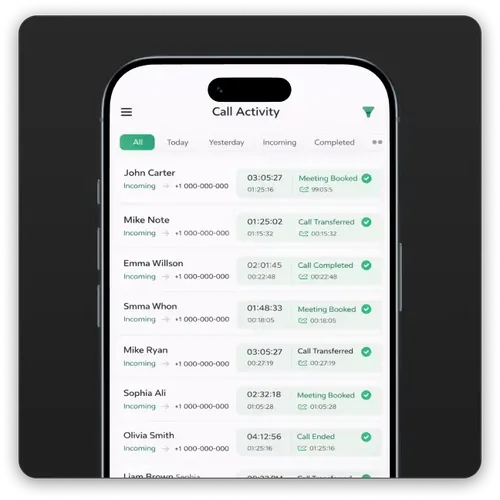
| Records | Recording, transcript and answers in your ATS | Recruiter notes |
| Off-Hours Coverage | Evenings and weekends, when candidates are free | Business hours |
How Bigly Sales Works for Staffing and Recruiting
From an application or an open shift to a recruiter conversation that matters.
A candidate applies or a shift opens
A new application lands in your ATS or CRM and triggers an AI call within seconds, or an open shift triggers calls to your available workers.
The AI screens with your questions
It discloses that it is an AI, confirms interest and availability, and asks your job-related screening questions.
Recruiters get the right candidates
Candidates who meet your stated requirements are warm-transferred to a recruiter or booked for an interview. Recruiters make every decision.
Everything is logged
Recordings, transcripts and answers are written to your ATS or CRM, giving you a consistent, reviewable record.
Your process, your questions. Screening questions and hand-off rules are approved by your team during onboarding. See how CRM integration works and how speed to lead changes placement rates.
Watch
Hear an AI agent on a live call
This is a real Bigly Sales agent working a live call. Listen for the pacing and how it asks questions and captures answers.
Callers decide in the first ten seconds whether to stay on the line. Judge the voice yourself.
Recruiting and staffing AI calling questions answered
Common questions from staffing agency owners, recruiting leaders and talent teams.
Can AI phone screen job candidates for a staffing agency, and is it legal?
Yes, when it is set up correctly. The AI asks every candidate the same job-related questions, records the answers, discloses that it is an AI, and leaves every hiring decision to a human recruiter. Laws such as New York City's Local Law 144 regulate automated tools that score or reject candidates, so Bigly's agents collect answers rather than making decisions. Confirm the rules for your jurisdictions with employment counsel.
Does the AI decide which candidates move forward?
No. The AI collects consistent answers and can route candidates who meet requirements you define, but recruiters review the results and make every hiring decision.
Can the AI fill open shifts?
Yes. When a shift opens, the AI calls your available workers, describes the shift, confirms who accepts and updates your system, which is far faster than calling a list one person at a time.
Can it schedule interviews?
Yes. The AI books interviews and client meetings, sends confirmations and handles reschedules, so recruiters are not stuck in back-and-forth.
Do we need consent to call candidates with an AI voice?
Calls to a mobile phone using an artificial or AI voice require the person's prior consent under the TCPA, which staffing firms usually capture on the application. Bigly discloses the AI on every call and honours stop requests immediately.
How much does AI calling cost for a staffing agency?
Bigly has five monthly plans from Scout at $99 a month to Rainmaker at $9,999 a month, based on included minutes, with 30 percent off on annual billing. Each plan covers inbound and outbound calling.
How do we get started?
Book a free 30-minute setup session. Bigly builds a working screening and scheduling agent for your desk live and places a test call to your phone.
Building a compliant calling program? See our TCPA compliance guide, the state-by-state TCPA guide and every industry we serve.
Every Applicant Called. Every Shift Filled Faster.
Use Bigly Sales to call every candidate in seconds, run consistent screens at any volume, and fill open shifts from your bench, while your recruiters make the decisions.


