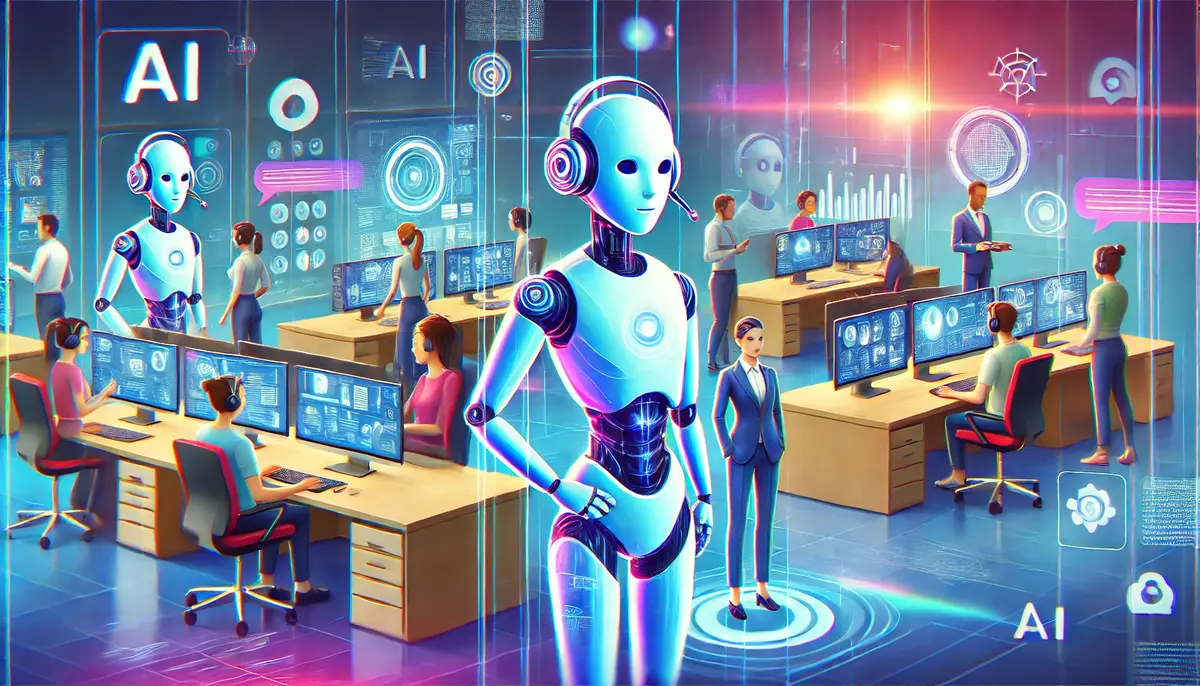


Contact center AI is the use of artificial intelligence to answer, route, and analyze customer conversations in a contact center. What started as an emergency fix during the pandemic has become the default way high-volume operations handle calls, and the technology is moving fast enough that a trends list from two years ago already reads as history.
This guide covers the eight contact center AI trends that matter in 2026, where each one came from, and what it means for your operation. The goal is practical: help you see which shifts affect you now and which ones you can safely watch from a distance.
Every claim here is grounded in what the technology verifiably does today, not what vendor decks promise for next year.
TL;DR
Contact center AI now answers routine calls end to end, not just deflects them to menus. The biggest 2026 shifts are AI voice agents replacing IVR menus, self-service that understands plain language, 24/7 coverage as a baseline customer expectation, and usage-based pricing that replaces per-seat licenses.
Compliance tightened too. The FCC ruled in February 2024 that AI-generated voices fall under TCPA rules, and disclosure expectations keep rising. If your call volume is small or your calls all need human judgment, most of these trends can wait, and adopting AI before your knowledge base is clean will amplify errors rather than fix them.
Key takeaways
- AI voice agents that hold real conversations are replacing touch-tone IVR menus as the front door of the contact center.
- Self-service has graduated from rigid chatbots to intelligent virtual agents that let customers state problems in their own words.
- Around-the-clock availability has shifted from differentiator to baseline customer expectation.
- Pricing is moving from per-seat licenses to usage-based models that charge for productive time.
- The FCC’s February 2024 ruling put AI-generated voices under TCPA rules, and disclosure requirements keep tightening.
- AI supplements human agents rather than replacing them, absorbing routine volume so people handle judgment calls.
- Analytics are moving from after-the-fact reporting to predicting what customers will ask next.
Table of contents
- What contact center AI is
- How these contact center AI trends took hold
- Trend 1: Voice agents replace IVR menus
- Trend 2: Conversation quality catches up
- Trend 3: Self-service graduates to plain language
- Trend 4: 24/7 coverage becomes the baseline
- Trend 5: Pricing shifts to usage
- Trend 6: AI becomes the competitive line
- Trend 7: Compliance and disclosure tighten
- Trend 8: Contact center AI trends turn analytics predictive
- Contact center AI trends FAQ
- The bottom line
What contact center AI is
Contact center AI is technology that uses natural language processing, machine learning, and voice synthesis to handle customer conversations that previously required a human agent. It answers inbound calls, understands what the caller wants, resolves routine requests, routes complex ones to the right person, and generates structured data from every interaction.
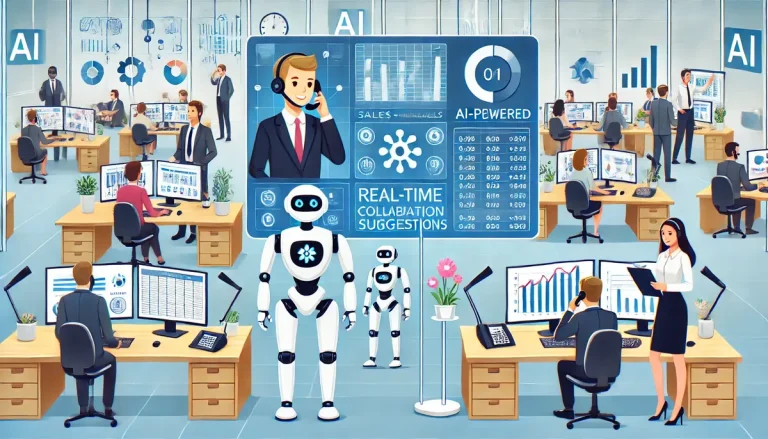
The category covers several distinct tools. AI voice agents answer and hold full phone conversations. Intelligent virtual agents power self-service across chat and voice. Agent-assist tools coach human agents live during calls. Analytics engines mine transcripts for patterns. Most operations adopt them in that order of impact.
For a deeper look at the inbound side specifically, see our guide to AI in inbound calls.
How these contact center AI trends took hold
The pandemic broke the old contact center model. Call volumes surged while staffing dropped, and businesses needed a way to serve customers without hiring their way out. A Harris Poll from that period found 55 percent of companies accelerated their AI adoption plans in 2020, with 67 percent planning further investment.
What began as crisis response compounded. Early deployments proved that AI could handle routine inquiries reliably, which funded broader rollouts. By 2026 the question in most contact centers is no longer whether to use AI but which calls still need a human.
That history matters because it explains the current market. The tools were battle-tested under peak load, and the vendors that survived are the ones whose systems held up when volume spiked.
Trend 1: Voice agents replace IVR menus
The touch-tone menu is dying. AI voice agents now answer the phone, greet the caller, and resolve requests through natural conversation instead of forcing people through press-1-for-billing trees.
The difference shows up in completion rates. Callers abandon rigid menus when their issue is not on the list, while a voice agent can handle off-script requests by understanding intent. It also routes better, because it identifies what the caller needs from their first sentences and sends the call to the right specialist with a transcript attached.
For operations still running legacy IVR, this is the highest-impact upgrade available. It touches every caller, every day. Our AI answering service guide covers what to look for in a replacement.
Trend 2: Conversation quality catches up
Modern contact center AI understands more than words. Current systems use natural language processing and machine learning to read context and emotional tone, then adjust their responses to the caller’s mood and sentiment.
Leading platforms deploy agents that learn continuously from their own transcripts, picking up on tone, inflection, and context to improve accuracy over time. The practical effect is that conversations feel less like talking to a machine and more like talking to a competent, if slightly formal, agent.
This trend has a limit worth stating plainly. AI reads frustration well enough to escalate sooner, but it does not replace human empathy on a genuinely difficult call. The right design uses emotion detection as an escalation trigger, not a substitute for people.
Trend 3: Self-service graduates to plain language
Customers increasingly prefer to solve issues on their own, and surveys consistently find that most people want self-service for routine problems rather than waiting for an agent. The tooling finally matches that preference.
The progression has three generations, and many operations still run all three at once.
| Factor | IVR menu | Scripted chatbot | Intelligent virtual agent |
|---|---|---|---|
| Input | Button presses | Keywords and buttons | Plain spoken or typed language |
| Handles off-script requests | No | Poorly | Yes, within its knowledge base |
| Channels | Phone only | Chat only | Phone, chat, SMS |
| Resolution style | Deflects to departments | Answers FAQs | Completes tasks end to end |
| Where it breaks | Anything off-menu | Multi-part questions | Judgment and empathy calls |
Intelligent virtual agents reduce wait times because customers state their issue once, in their own words, and get either a resolution or a well-routed transfer. The operations seeing the best results treat the IVA as the front door and keep a clean, fast path to a human behind it.
Trend 4: 24/7 coverage becomes the baseline
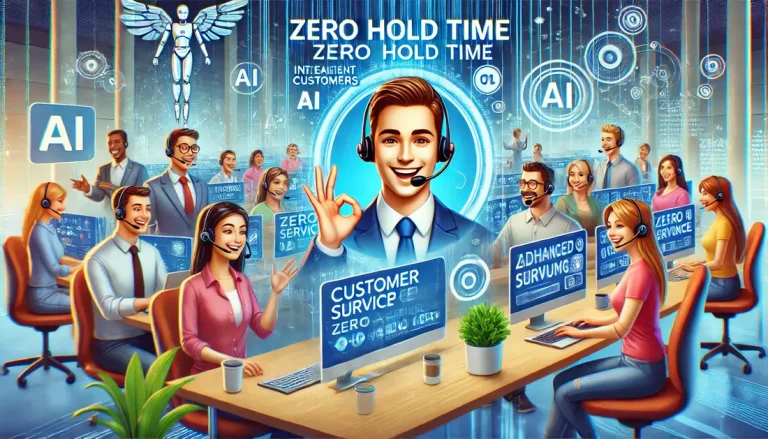
Customers now expect support at any hour, and AI made meeting that expectation affordable. AI systems handle inquiries and routine tasks around the clock without breaks, holidays, or night-shift premiums.
The staffing effect is underrated. When AI covers nights and weekends, human agents work regular hours, which improves retention in an industry known for burnout. The business effect is equally direct: after-hours calls that used to hit voicemail become answered conversations, and many of them are revenue.
Different industries feel this differently. Healthcare scheduling, home services, and ecommerce order support see the largest after-hours volume. See our industry pages for vertical-specific detail.
See it answer
Give your contact center a 24/7 front door
A 20-minute demo shows Bigly Sales answering and routing calls the way your best agent would. Deployment takes days, not a quarter.
Trend 5: Pricing shifts to usage
The per-seat license is losing ground. Several vendors now charge only for productive time, per call or per minute, which aligns cost directly with usage and lets operations scale support up and down as volume moves.
This matters most for seasonal businesses. Staffing for peak means paying for idle capacity the rest of the year, while usage pricing means the flu-season surge or the holiday rush costs more only while it lasts. Research on AI economics suggests that by 2030 a large share of gains will come from product and service enhancements of exactly this kind, but the near-term math is simpler: you stop paying for empty seats.
When evaluating vendors, ask specifically what counts as billable. Some charge for every dial or connection, others only for completed conversations. The difference compounds at volume.
Trend 6: AI becomes the competitive line
Contact center AI has crossed from experiment to table stakes in high-volume industries. Businesses using it answer faster, hold shorter queues, and capture cleaner data, and those advantages show up in retention.
Companies that adopted AI in their contact centers tend to report stronger revenue growth and better customer retention than those that have not, though results vary widely with execution quality. The honest read is that AI does not create a good operation, it amplifies one. A well-run center gets faster and more consistent, while a badly run one automates its own mistakes.
The competitive risk now runs in the other direction. In categories where two or three competitors answer instantly at midnight, the company that sends callers to voicemail is the outlier.
Trend 7: Compliance and disclosure tighten
Regulation caught up with the technology. In February 2024 the FCC ruled that AI-generated voices fall under the TCPA’s restrictions on artificial and prerecorded voices, which means outbound AI calls to cell phones require prior express written consent. The FTC’s Telemarketing Sales Rule adds its own restrictions on misrepresentation, and several states enforce stricter mini-TCPA statutes on top.
Inbound AI carries obligations too. Systems that handle health information need HIPAA controls, and consumer data falls under GDPR or CCPA depending on where callers live. Disclosure expectations are also rising, and the safe pattern is to tell callers they are speaking with an automated system.
For 2026, treat compliance as a vendor selection criterion, not an afterthought. Ask for compliance documentation up front, and be wary of any vendor that treats consent management as your problem alone.
Trend 8: Contact center AI trends turn analytics predictive
Contact center AI generates structured data from every conversation: transcripts, dispositions, sentiment, and resolution paths. The trend is what happens with that data next.
Reporting used to look backward at handle times and queue lengths. Current systems analyze call patterns to identify emerging issues before they spike, predict what customers will ask next, and flag knowledge base gaps that cause repeat calls. A service center that spots a surge in questions about a confusing invoice line can fix the invoice, which is cheaper than answering the question ten thousand times.
The compounding effect is real. Operations that feed transcript analysis back into scripts, knowledge bases, and product decisions improve every quarter, while operations that collect data without acting on it pay for storage.
Contact center AI trends FAQ
What is contact center AI?
Contact center AI is technology that uses natural language processing, machine learning, and voice synthesis to handle customer conversations that once required human agents. It answers calls, understands caller intent, resolves routine requests, routes complex issues to people, and analyzes every interaction for patterns that improve future service.
What are the biggest contact center AI trends in 2026?
The most consequential shifts are AI voice agents replacing IVR menus, self-service that understands plain language, 24/7 availability as a standard expectation, usage-based pricing replacing per-seat licenses, tighter compliance and disclosure rules, and analytics that predict issues instead of just reporting them. Voice agents at the front door carry the largest day-to-day impact.
Will AI replace contact center agents?
No. AI absorbs routine, repetitive volume like order status, scheduling, and FAQs, which frees human agents for calls that need judgment, empathy, or authority. Most operations redeploy staff to complex work and quality roles rather than cutting them. The centers that try to remove humans entirely tend to walk it back.
How does AI reduce contact center costs?
Three ways. It handles routine calls without per-agent labor cost, it removes the need to staff for peak volume since capacity flexes automatically, and it covers nights and weekends without shift premiums. Usage-based pricing strengthens the effect because you pay for conversations handled rather than seats filled.
What is an intelligent virtual agent?
An intelligent virtual agent, or IVA, is an AI system that lets customers describe their issue in their own words by phone or chat and then resolves it or routes it. It differs from a scripted chatbot by understanding natural language rather than matching keywords, and from an IVR menu by completing tasks instead of deflecting callers.
Is contact center AI compliant with regulations like TCPA and HIPAA?
It can be, but compliance depends on the vendor and the configuration. The FCC’s February 2024 ruling put AI-generated voices under TCPA consent rules for outbound calls, healthcare data requires HIPAA controls, and state privacy laws add more. Ask vendors for compliance documentation before signing rather than assuming coverage.
How should a contact center start with AI?
Start with the highest-volume routine call type, usually order status, scheduling, or hours and location questions. Clean up the knowledge base first, since AI answering from wrong documentation multiplies errors. Launch on that one call type, tune against real transcripts for two to four weeks, then expand coverage one category at a time.
What does contact center AI cost?
Pricing models vary from per-minute and per-call rates to monthly platform fees, and usage-based models are increasingly common. Costs scale with call volume rather than headcount, which usually beats staffing for peak. Get quotes against your actual monthly call counts and ask exactly what counts as billable time.
How does AI affect customer satisfaction in contact centers?
Satisfaction rises when AI cuts hold times, resolves routine issues in one contact, and keeps quality consistent at 3 a.m. It falls when the AI is hidden, misunderstands callers, or blocks the path to a human. Disclosure and a fast escalation route are the two design choices that decide which outcome you get.
Which businesses benefit most from contact center AI?
Operations with steady daily call volume and a high share of repeatable requests see the fastest payback, including healthcare scheduling, retail and ecommerce support, banking FAQs, insurance service lines, and telecom billing. Very small call volumes or lines where nearly every call needs human judgment, like crisis support, are a poor fit.
The bottom line
Contact center AI moved from pandemic stopgap to standard infrastructure in about five years. The 2026 trends point the same direction: conversational front doors instead of menus, self-service that actually resolves, availability around the clock, pricing that tracks usage, and regulators holding the whole stack to consent and disclosure rules.
None of it replaces a well-run human team, and none of it fixes a broken knowledge base. Adopt where your volume is routine and repeatable, keep the path to a person short, and let the transcript data make you better every quarter.
Ahead of the curve
Put these trends to work this month
Bigly Sales answers your calls 24/7, routes hot ones to your team, and reports on every conversation. See it live in a 20-minute demo.