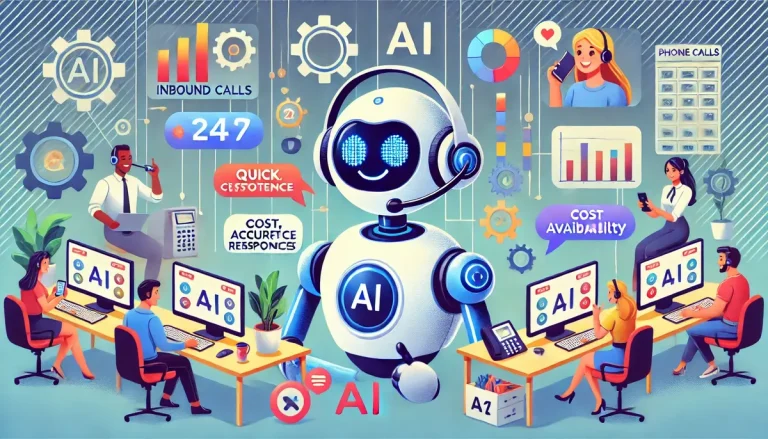



Zero hold time means every caller gets an answer the moment the call connects, with no queue, no ringback loop, and no waiting music. It sounds like a stretch goal. With AI voice agents it is simply how the system works, because software can take every call at once instead of one at a time.
Long waits do real damage. Callers hang up, call competitors, or flood your other channels with the same question. This guide explains what hold time is, how AI removes it, seven proven methods you can put to work, what the rollout costs, and the situations where a human team is still the better answer.
TL;DR
AI voice agents deliver zero hold time because software answers unlimited calls at the same moment, so callers never enter a queue. The traditional call center target is answering 80 percent of calls within 20 seconds, and an AI agent beats it by picking up every call on the first ring, around the clock.
Getting there takes real work on integration, training, and escalation paths, and the payoff is fastest for teams with high volumes of routine calls. If most of your calls are complex, emotional, or heavily regulated conversations that a human must handle end to end, AI will remove the wait but not the work, and you should not buy it for that reason alone.
Key takeaways
- Hold time exists because human agents handle one call at a time and call volume never arrives evenly.
- AI voice agents answer every call instantly because concurrency is unlimited, which removes the queue entirely.
- Natural language processing lets AI understand the caller’s intent and either resolve the issue or route it correctly.
- Predictive analytics keeps your remaining human team staffed for the calls AI hands off.
- Hiring more agents, callbacks, and IVR menus reduce waits. Only AI answering removes them completely.
- Plan for integration effort, staff training, and clear escalation paths before you commit.
- AI is the wrong tool when nearly all of your calls need human judgment from the first second.
Table of contents
- What hold time is
- How AI answers every call instantly
- 7 proven AI methods for zero hold time
- Ways to cut the wait compared
- Implementation challenges and how to handle them
- Who zero hold time is wrong for
- How to roll out AI without breaking your call center
- Zero hold time FAQ
- The bottom line

What hold time is
Hold time is the time a caller spends waiting to speak with an agent after the call connects. It can run from a few seconds to many minutes depending on call volume, staffing, and how complicated the questions ahead of them are.
Why callers end up on hold
Three causes drive almost every long queue.
- High call volume. Calls arrive in bursts. When many customers dial in at once, the queue grows faster than agents can clear it.
- Limited staffing. A human agent handles exactly one conversation at a time. If every agent is busy, everyone else waits.
- Complex inquiries. One long troubleshooting call ties up an agent while five quick questions stack up behind it.
What long waits cost you
The damage shows up in three places.
- Abandoned calls. Frustrated callers hang up before anyone answers, and many never call back.
- Reputation damage. Consistently long waits train customers to expect poor service and to say so in reviews.
- Lost revenue. A missed sales call is often a sale made by a competitor who picked up first. Answering fast is the core of speed to lead, and the same logic applies to support.
Understanding the causes matters because most fixes only shrink the queue. Removing it entirely requires changing who, or what, answers the phone.
How AI answers every call instantly
AI removes the queue by breaking the one agent, one call constraint. Three capabilities work together.
Unlimited concurrency
An AI voice agent is software, so it can hold one conversation or five hundred at the same moment. Volume spikes that would bury a human team simply do not create a queue. This is the single mechanism that makes a zero-second wait possible rather than merely shorter waits.
Natural language processing
Natural language processing, or NLP, lets the system understand what a caller actually wants instead of forcing them through menu trees. The AI interprets the request, answers routine questions directly, and gathers context before any handoff so customers do not repeat themselves. If the terminology is new to you, the AI calling glossary covers the key terms in plain language.
Predictive analytics for the human side
AI does not eliminate your human team. Predictive analytics studies historical call data to forecast when escalations will spike, so the right number of people are available for the conversations that genuinely need them. The AI absorbs the surge, and your staff handles the exceptions without a backlog.
7 proven AI methods for zero hold time
These seven methods stack. Most teams start with one or two and expand as results come in.
1. AI voice agents on inbound lines
An AI receptionist answers on the first ring, every time, including nights and weekends. It greets the caller, understands the request, resolves routine matters like hours, order status, scheduling, and account questions, and routes the rest.
2. AI chatbots on web and SMS
Many calls exist only because the answer was hard to find online. Chatbots resolve those questions in the channel where the customer already is, which shrinks phone volume before it happens.
3. Intent-based routing
Instead of a five-layer phone menu, the AI asks one open question, identifies the intent, and connects the caller to the right person or workflow immediately. Misroutes and transfer loops disappear.
4. Predictive staffing
Forecasting models predict escalation volume by hour, so human schedules match reality. You stop paying for idle coverage while also avoiding understaffed crunches.
5. Automated callbacks for human-only queues
When a caller insists on a specific person who is busy, the AI books a callback slot and confirms it by text. The customer gets their time back instead of listening to music.
6. AI-completed after-call work
Summaries, notes, and CRM updates that used to consume minutes between calls are drafted automatically. Every human agent finishes calls faster, which raises the capacity of the team you already have.
7. Full conversation records for continuous fixes
Because every AI conversation is transcribed, you can see exactly which questions drive volume and fix the root causes upstream, from confusing invoices to unclear product pages.
Ways to cut the wait compared
A zero-second wait is one goal with several possible paths. Here is how the main options stack up. Note that callbacks, IVR menus, and staffing tools are different product categories than what Bigly Sales sells. AI answering is a different approach, not an upgrade of those tools.
| Approach | Effect on wait | Cost profile | Best fit |
|---|---|---|---|
| Hire more agents | Shorter queues at staffed hours only | Highest, salary and training per seat | Complex, high-touch call types |
| Callback and virtual queuing | Wait still exists, just off the phone | Low software cost | Teams not ready to automate answering |
| Self-service IVR menus | Deflects simple calls, others still queue | Low to moderate | High volumes of identical questions |
| AI voice agents | None, every call answered instantly | Subscription, scales with usage | Routine-heavy volume, 24/7 coverage |
See it live
Hear an AI agent answer on the first ring
Book a 15-minute demo and watch an AI voice agent take real calls with no queue at all. You will know the same day whether it fits your call flow.
Implementation challenges and how to handle them
AI answering works, but the rollout has real friction points. Plan for these five.
Upfront cost and budgeting
You will pay for software, setup, and integration time before savings appear. Modern platforms are subscription based, so the outlay is far below hiring even one full-time agent, but it is not zero. Review current pricing against your monthly call volume before you commit.
Employee training
Your team needs to know what the AI handles, how escalations arrive, and how to review AI conversation logs. Agents who understand the system trust it. Agents who are surprised by it resist it. Budget a few focused sessions rather than assuming people will figure it out.
Integration with existing systems
The AI is only as useful as the data it can reach. Connect it to your calendar, CRM, and ticketing system so it can actually book, update, and resolve instead of just talking. A phased approach works best, starting with one call type and expanding as the AI proves itself.
Keeping the human touch
Some conversations need empathy, judgment, and authority that software does not have. The fix is a clean escalation path with full context passed along, so the customer never repeats their story. AI should absorb the routine so your people have room for the hard calls, not replace them.
Data privacy and security
AI systems process large volumes of customer conversations, so security is a compliance requirement rather than a nice-to-have. Follow the FTC’s privacy and security guidance for businesses, encrypt recordings, restrict access, and audit regularly.
Who zero hold time is wrong for
Honest answer, this is not for everyone.
If your call volume is a handful of calls a day, a well-trained human already answers instantly and the software adds little. If nearly every call involves regulated advice, crisis support, or high-stakes negotiation, the AI can only greet and route, and you are paying for a queue killer you barely need.
Poorly deployed automation can also backfire. The Consumer Financial Protection Bureau’s report on chatbots in consumer finance documents how trapping customers in automation that cannot resolve their issue creates frustration instead of removing it. The lesson is simple. Deploy AI where it can genuinely finish the job, and give everyone else a fast, obvious path to a person.
How to roll out AI without breaking your call center
A phased rollout removes most of the risk.
- Week 1. Pull your call logs and rank call types by volume. Pick the top one or two routine types.
- Week 2. Configure the AI for those call types, connect calendar and CRM, and write escalation rules.
- Week 3. Run the AI on after-hours calls only, when the alternative is voicemail. Review every transcript.
- Week 4. Expand to business-hours overflow, so the AI catches what your team cannot answer within a few rings.
- Month 2 and beyond. Move to AI-first answering for routine lines, track resolution and escalation rates, and add call types as accuracy holds.
Measure abandoned call rate before and after. That single number tells you what the queue was costing you.
Zero hold time FAQ
How does AI provide zero hold time in call centers?
AI voice agents are software, so they answer every call the instant it connects, no matter how many calls arrive at once. There is no queue because concurrency is unlimited. Routine questions get resolved on the spot, and complex calls are routed to a human with full context, so the wait that normally happens before the conversation simply never occurs.
What is a good hold time for a call center?
The long-standing industry target is answering 80 percent of calls within 20 seconds. Many teams miss it during peaks, which is when abandonment spikes. AI answering makes the benchmark mostly obsolete because every call is picked up on the first ring, and the meaningful metrics shift to resolution rate and escalation quality.
How much does an AI call answering system cost?
Most AI answering platforms charge a monthly subscription that scales with usage, which typically lands far below the fully loaded cost of a single full-time agent. Setup and integration add some one-time effort. Compare the subscription against your current cost per call and your abandoned call rate to see the real payback period.
Will AI replace human agents in call centers?
No. AI absorbs routine, repetitive calls and the overflow that creates queues, while human agents keep the conversations that need empathy, judgment, or authority. Most teams end up reallocating people to higher-value work rather than cutting them. The practical shift is that humans stop being the bottleneck for simple questions.
How long does it take to implement AI call answering?
A basic deployment covering one or two routine call types typically takes days to a few weeks, including CRM and calendar integration. Most teams start with after-hours coverage, review transcripts, then expand to overflow and AI-first answering over a month or two. Complex integrations with legacy phone systems take longer.
Can AI handle complex customer issues?
Not end to end, and it should not try. AI reliably handles routine questions, scheduling, qualification, and data collection. For complex or sensitive issues its job is to gather context quickly and hand the caller to the right person immediately. A well-designed escalation path matters more than raw AI capability.
Is AI call answering secure and compliant?
It can be, if you treat it like any system that touches customer data. Look for encryption of recordings and transcripts, role-based access, and retention controls, and follow FTC guidance on data security. For outbound use, confirm the platform supports consent and calling-hour rules that apply to your industry.
What happens when the AI cannot answer a question?
A properly configured agent recognizes the limit, tells the caller plainly, and transfers to a human or books a callback with the conversation context attached. The failure mode to avoid is looping. If your vendor cannot show you the escalation flow working live, that is a red flag.
Do customers actually like talking to AI?
Customers like getting answers immediately, and they dislike waiting and repeating themselves. When the AI resolves the request quickly, satisfaction is high. When it blocks access to humans, satisfaction drops fast, which is exactly what regulators have documented with poorly deployed chatbots. Design for resolution, not deflection, and the reception is positive.
The bottom line
Hold time is a capacity problem, and AI solves it by making answering capacity effectively unlimited. Chatbots, NLP, and predictive staffing each help, but AI voice answering is the only approach on the list that takes the wait to zero rather than making it shorter.
Go in with clear eyes. Budget for integration and training, keep a fast path to humans, and skip the whole project if your calls are too complex or too few for automation to matter. For everyone else, the first ring is the new standard.
Stop losing callers
Put an AI agent on your line this week
Tell us your top three call types and we will show your AI agent handling them. Setup takes days, not months.