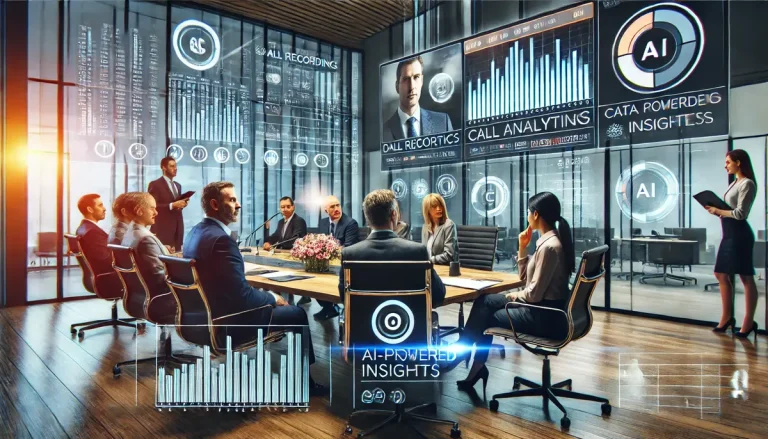


AI in inbound calls is the use of conversational AI to answer, route, and resolve the phone calls customers place to your business. Instead of a hold queue or a touch-tone menu, callers reach a voice agent that understands natural language, answers routine questions, and passes complex calls to your team with full context.
Inbound volume is where most businesses feel phone pain first. Customers call about billing, order status, appointments, and account questions at all hours, and every minute of hold time costs goodwill. AI changed the economics of answering those calls.
This guide explains how the technology works, what it does well, where it falls short, and how to decide whether it fits your operation in 2026.
Key takeaways
- AI in inbound calls uses natural language processing and machine learning to understand callers and respond accurately, not a touch-tone menu.
- The four problems it solves are long wait times, inconsistent service quality, limited business hours, and high staffing costs.
- Answering is continuous. The AI takes calls 24/7, including nights, weekends, and seasonal spikes, without added headcount.
- Routing improves because the AI identifies caller intent in the first sentences and sends the call to the right person with context attached.
- Compliance matters. Systems handling health or financial data need HIPAA, GDPR, or CCPA controls built in, not bolted on.
- AI does not replace human agents. It clears routine volume so your team handles the conversations that need judgment.
Table of contents
- What AI in inbound calls is
- Why businesses switch
- Why inbound calls get wasted without it
- Key benefits
- Three ways to answer the phone, compared
- The three inbound call types AI handles
- Why the callback is the most valuable inbound call
- Key features that matter
- Integration with your existing systems
- Challenges and how to handle them
- Compliance rules that still apply on inbound
- When AI is the wrong answer
- Where the technology goes next
- AI in inbound calls FAQ
- The bottom line
What AI in inbound calls is
AI in inbound calls is technology that uses natural language processing and machine learning to answer and manage the calls your customers make to you. Unlike traditional call handling, the AI understands and interprets human language, so a caller can state a problem in their own words and get an accurate, contextually relevant response.
This is different from an interactive voice response menu. An IVR forces callers through preset options. An AI voice agent listens, works out intent, and either resolves the request or routes the caller to the right human. For a full breakdown of the product category, see our AI answering service guide.
The distinction matters because callers judge you on the first 30 seconds. A system that understands “I was double charged last month” beats one that says press 4 for billing.
Why businesses switch
AI answering addresses four pain points that come standard with traditional call handling.
- High wait times. Customers sit in hold queues, and frustration compounds with every minute.
- Inconsistent service quality. Human agents vary by training, workload, and time of day.
- Limited availability. Traditional call centers operate within business hours, and customers do not.
- High operational costs. Staffing a phone line at quality is expensive, and peak coverage means paying for idle capacity the rest of the year.
AI mitigates all four by providing consistent answers around the clock at a cost that scales with calls handled, not seats filled.
Why inbound calls get wasted without it
A large share of business inbound calls never reach a person. Some go to voicemail, some die inside an IVR, and some simply ring out. Published answer-rate benchmarks vary widely by industry and none of them are worth quoting as gospel, but every operator who has audited their own call logs finds the same pattern. The calls you paid to generate are the ones you are missing.
For a business spending on advertising, SEO, and purchased leads, that is a hole in the bottom of the bucket. You are funding demand and then failing to receive it.
The after-hours gap makes it worse. A business open ten hours a day, five days a week, is unreachable for roughly two thirds of the week. Prospects do not stop calling during those hours. They stop calling you. Carrier-side issues explain some of the outbound problem, and we cover those in the piece on why calls do not get answered. Inbound is usually the simpler side to fix, because nobody is filtering a call that a customer chose to place.
Key benefits
Faster, more accurate customer service
The AI addresses routine queries instantly, which removes the hold queue for the majority of callers. Because it works from your knowledge base and account data, answers stay accurate and consistent. It also personalizes responses using customer history, so a repeat caller does not start from zero.
A telecommunications company uses AI to handle common questions about billing and service availability, so customers get immediate answers instead of waiting in a queue. An insurance agency uses the same approach for quotes and policy questions based on the caller’s past inquiries.
24/7 availability
The AI operates around the clock, so customers reach you regardless of time zones or business hours. An online retailer uses AI to handle order status and returns questions outside regular hours, which is exactly when many shoppers call. Missed after-hours calls are usually invisible in reporting, which makes this benefit larger than most teams expect.
Cost efficiency
Automating routine calls reduces the staffing required to cover the phone line. Human agents stop repeating the same ten answers and focus on complex issues. A bank uses AI to manage frequently asked questions about account balances, which cut the volume reaching its service team without cutting service quality.
Scalability
Call spikes stop being staffing emergencies. A healthcare provider uses AI to handle appointment scheduling and prescription refill requests during flu season, absorbing the surge without adding temporary staff or degrading service. The same elasticity applies to product launches, billing cycles, and marketing campaigns that drive call volume.
Three ways to answer the phone, compared
Most businesses choose between three approaches to inbound calls, and each has a distinct failure mode.
| Factor | Human-only team | Traditional IVR menu | AI voice agent |
|---|---|---|---|
| Availability | Business hours | 24/7, menu only | 24/7, full conversations |
| Handles natural language | Yes | No, preset options | Yes |
| Cost model | Per seat, fixed | Low, but deflects poorly | Per call or usage based |
| Consistency | Varies by agent | Rigid | Consistent on every call |
| Where it breaks | Volume spikes, after hours | Anything off-menu | Complex judgment calls |
The practical takeaway: IVR menus save money by frustrating callers into hanging up, which is not the same as serving them. AI voice agents resolve routine calls the way a good agent would, and hand off the rest. Human teams remain essential for the calls that need empathy, negotiation, or authority.
The three inbound call types AI handles
AI inbound calling covers three distinct call types. Each one follows a different flow and solves a different problem, and mixing them into a single script is the most common configuration mistake.
New leads calling in
Somebody saw an ad, read a page, or took a referral, and then picked up the phone. This is the easiest conversion in the building because the person already acted. The agent answers instantly, asks what they are looking for, what the timeline is, and whether they meet the basic criteria, then either transfers to a closer or books the appointment. Speed is the entire advantage here, since a caller who reaches a recording is one dial away from a competitor who picked up.
Existing customers with routine requests
Billing questions, appointment changes, policy inquiries, document requests, and status checks are structured and repetitive, which is exactly what a voice agent handles well. The agent looks up the account, answers, and logs the resolution. Anything genuinely complex, such as a complaint, a dispute, or a question that needs a licensed person, goes to a human with a summary. Support teams that route this way spend noticeably less time on repeat questions and more on exceptions.
Callbacks from missed outbound attempts
Your campaign dialed a lead, the lead missed it, and now they are ringing the number back. This call is worth more than the other two and is the one most often thrown away.
Why the callback is the most valuable inbound call
Somebody who returns a call from a number they do not recognize has already done the hard part. They noticed, they were curious, and they are on the line right now. That is the strongest intent signal available in outbound.
If the callback reaches voicemail, the lead is gone. If it reaches an IVR menu, it is probably gone. If a receptionist answers, says hold on, and the transfer drops, it is certainly gone. Inbound calling with AI picks it up immediately, matches the number against the earlier outbound attempt, and opens with a line that references the original reason for the call. The person is not being cold called. They are continuing a conversation they started.
On a managed deployment this ties directly into the speed-to-lead system, so the agent has the earlier attempt’s notes rather than starting from a blank record. It is worth auditing your own setup on this single point. Call your main line from an unknown mobile after hours and see what happens.
Key features that matter
Natural language processing
NLP is the core capability. It covers speech recognition, which transcribes spoken language accurately, intent detection, which works out what the caller wants, and contextual understanding, which keeps the thread of the conversation. A travel agency uses NLP-driven AI to help customers book flights and hotels by processing spoken requests directly.
Intelligent call routing
The AI analyzes caller needs in the first sentences and directs the call to the right department or agent. This cuts transfer chains and matches customers with agents who have the expertise to solve their issue. A tech support center routes calls based on the specific product or problem the caller mentions, so callers reach the right specialist the first time.
Personalization
The AI draws on previous interactions, preferences, and behavior to tailor responses. Callers feel recognized rather than processed, and repeat contacts get shorter because the system already knows the history.
Data analytics
Every call generates structured data. The AI analyzes call patterns to identify common issues, collects feedback, and predicts what customers will ask next. A customer service center uses this analysis to spot its most frequent questions and update its knowledge base, which improves answer accuracy for every future call. Speed matters on the outbound follow-up too, and the same data feeds it. See how response time affects conversion in our speed-to-lead guide.
Hear it yourself
Let AI answer your next call
A free 30-minute setup session shows Bigly Sales answering, routing, and booking the way your best agent would. Setup takes days, not months.
Integration with your existing systems
The value of AI answering depends heavily on what it can see and update. Three integration factors decide the outcome.
Ease of integration
The AI should connect to your existing phone system and CRM without a rebuild. Look for solutions that integrate with minimal disruption and confirm compatibility with your current workflows before committing. A financial services firm connected AI to its CRM so the system could reference customer records and give personalized answers on the first call.
Unified channels and workflows
Inbound calls rarely live alone. The AI should share context with chat, SMS, and email so a customer who started on one channel does not repeat themselves on the phone. A retail company connected AI to its online chat, letting customers get instant product answers and move to a human agent for detailed questions without losing the thread.
Continuous improvement
The system should learn from its own transcripts. Feedback loops and adaptive learning mean the AI you have in six months answers better than the one you launched with. A tech support center refines its responses by analyzing call patterns and customer feedback on a rolling basis.
Challenges and how to handle them
Data privacy and security
Inbound calls carry sensitive data, from payment details to health information. Your AI vendor must comply with the regulations that govern your industry, including GDPR and CCPA for consumer data and HIPAA for health information. A healthcare provider deploying AI for appointment scheduling verified HIPAA compliance before launch, protecting patient information while automating the workflow. Ask for the compliance documentation before you sign, not after.
Managing customer expectations
Tell customers they are talking to AI and give them a clear path to a human. A bank that introduced AI for routine inquiries kept a dedicated human team for complex financial questions, and the handoff between the two is what made the rollout work. Hiding the AI, or trapping callers inside it, destroys the trust the system is supposed to build.
Continuous training and updates
An AI answering system is not install-and-forget. It needs regular updates with current product information, pricing, and policies, plus ongoing training on new question types. A retail company updates its system with new product information and seasonal promotions on a schedule, so callers always hear accurate answers.
Compliance rules that still apply on inbound
Inbound is lighter than outbound because the caller initiated the contact, which removes the consent question that governs marketing dials. It does not remove everything.
Disclose that the caller is speaking with an automated system. The FCC confirmed in February 2024 that AI-generated voices are treated as artificial voices under the TCPA, and several states have moved toward requiring disclosure when a person is interacting with AI. Clear disclosure at the top of the call costs almost nothing and removes an argument you do not want later. The underlying statute and its damages provisions sit in 47 U.S.C. 227, and the FTC’s Telemarketing Sales Rule guidance covers the disclosure and record keeping obligations that reach inbound calls generated by advertising.
Two points get stated incorrectly often enough to correct here. The one-to-one consent rule, which would have required separate consent for each individual seller, was vacated by the Eleventh Circuit in January 2025 and never took effect. Prior express written consent under the existing TCPA standard remains the operative requirement for outbound marketing calls, and any vendor citing one-to-one consent as binding law is working from stale material. Adopting it as internal policy is still reasonable, since it produces a cleaner record.
The requirement that is genuinely landing concerns revocation of consent, which has to be honored promptly and across channels, with the remaining pieces phasing in through 2026. That matters on inbound because an opt-out spoken to your AI agent has to suppress your outbound campaigns too, immediately, not at the next nightly sync.
Log the opt-out, log the recording, and keep the transcript. Our compliance approach is described on the TCPA-compliant AI calling page. None of this is legal advice, so have counsel review your program.
When AI is the wrong answer
Honest vendors will tell you the technology has boundaries, and buying past them wastes money.
Skip AI answering if your call volume is a handful of calls a day, because the setup effort will outweigh the savings. Skip it if nearly every call requires human judgment, such as crisis lines, complex B2B account management, or high-stakes negotiations. And postpone it if your knowledge base is a mess, because an AI that reads from wrong documentation will confidently give wrong answers at scale.
The right profile is meaningful daily call volume with a large share of routine, repeatable requests. Order status, scheduling, billing questions, hours and availability, and first-level support all fit. If that describes less than a third of your calls, fix the knowledge and process problems first.
Where the technology goes next
Three developments are shaping the next generation of inbound AI.
- Deeper language understanding. Models keep getting better at complex, multi-part questions, which expands the share of calls AI can resolve without a transfer.
- Emotion recognition. Systems are learning to detect frustration or urgency in a caller’s voice and adjust tone, or escalate to a human sooner.
- Connected devices. A home automation company could let customers troubleshoot smart home systems through an AI-assisted call that reads live device status while they talk.
Inbound volume also looks different depending on what you sell. For how this plays out in an online store, where order status calls dominate, see our guide to AI for ecommerce.
AI in inbound calls FAQ
What is AI in inbound calls?
It is the use of conversational AI, built on natural language processing and machine learning, to answer and manage the calls customers place to a business. The AI understands what the caller says in plain language, resolves routine requests like billing or scheduling, and routes complex calls to human agents with context attached.
Can AI actually answer phone calls?
Yes. Modern AI voice agents pick up the call, greet the caller, understand spoken requests, and respond in a natural-sounding voice. They can look up account information, book appointments, answer product questions, and transfer to a human when needed. The quality depends on how well the system is connected to your data.
How is an AI voice agent different from an IVR?
An IVR plays a menu and forces callers to press buttons through preset paths. An AI voice agent holds a conversation. The caller states the problem in their own words, and the AI works out intent and responds. IVRs deflect calls, while AI agents resolve them, which is a different customer experience entirely.
Does AI answering replace human agents?
No. It absorbs routine, repetitive calls so human agents can focus on issues that need judgment, empathy, or authority. The best deployments pair the two, with the AI handling first contact and a clear escalation path to a person. Teams usually redeploy staff to higher-value work rather than cutting them.
Is AI call handling secure enough for regulated industries?
It can be, if the vendor is built for it. Healthcare deployments need HIPAA compliance, and consumer businesses need GDPR or CCPA controls depending on where customers live. Ask for compliance documentation, encryption standards, and data retention policies before signing. A vendor that cannot produce them quickly is the wrong vendor for regulated work.
How much does AI inbound call handling cost?
Pricing is usually per call, per minute, or a monthly platform fee, and it scales with usage rather than headcount. That makes it cheaper than staffing for peak volume, since you stop paying for idle capacity. Exact numbers vary by call volume and complexity, so get quotes based on your real monthly call counts.
What happens when the AI cannot answer a question?
A well-configured system escalates. It transfers the caller to a human agent along with the transcript and any account data it gathered, so the caller does not repeat themselves. Systems without a clean escalation path trap callers in loops, which is the single fastest way to lose customer trust.
How do customers react to AI answering the phone?
Most customers care about speed and resolution more than who answers. Surveys consistently find that people prefer solving routine issues on their own without waiting for an agent. Reaction turns negative when the AI is hidden, cannot understand them, or blocks the path to a human, so disclosure and escalation design matter.
How long does it take to set up AI for inbound calls?
A managed platform can go live in days, since the vendor handles configuration, phone system connection, and knowledge base loading. Timelines stretch when your documentation is outdated or your phone infrastructure is unusual. Budget the first two to four weeks after launch for tuning based on real call transcripts.
Which businesses benefit most from AI inbound answering?
Businesses with steady daily call volume and a high share of routine requests see the fastest payback. That includes healthcare scheduling, retail order status, banking FAQs, insurance quotes, home services booking, and telecom billing questions. Very low call volume or judgment-heavy calls, like crisis support, are a poor fit.
Can AI handle support calls or only sales?
Both, though it is strongest on the structured end of support. Billing questions, appointment rescheduling, policy inquiries, document requests, and account lookups are all repetitive and rule-based, which is where a voice agent performs well. Anything emotionally charged or genuinely ambiguous, such as a complaint or a disputed charge, should route to a person quickly with a summary of what has been said so far.
Does it work after hours and on weekends?
Yes, and for many operations that is the main reason to deploy it. A call arriving at 9 PM on a Friday or 7 AM on a Sunday is handled the same way as one at 2 PM on a Tuesday. The agent answers, qualifies, and either books an appointment or takes the support action. The realistic constraint is that live transfers need somebody available to receive them, so after-hours flows usually end in a booked appointment rather than a warm transfer.
Do I need new phone numbers?
No. The agent connects to your existing numbers through SIP, so callers dial exactly what they always dialed and your printed materials, ads, and listings stay valid. This is a meaningful difference from replacing a phone system, since the telephony you already pay for stays where it is. What changes is only what happens after the ring.
What is the single highest-value inbound call?
A callback from someone who missed an outbound attempt. That person noticed an unfamiliar number, decided to return the call, and is on the line at that moment, which is the strongest intent signal in outbound work. Sending that call to voicemail wastes the entire cost of generating and dialing the lead. If you audit one thing this week, call your own main line from an unknown mobile after hours and see where it lands.
The bottom line
AI in inbound calls earns its keep by answering instantly, around the clock, at a cost that tracks call volume instead of headcount. The technology handles the routine majority of calls, feeds your team clean data, and hands over the hard conversations with context. Businesses that adopt it well see shorter waits, steadier quality, and a service team focused on work that needs a human.
It is not for everyone. Low call volume, judgment-heavy calls, or a broken knowledge base will sink the project before it starts. Fix those first, then automate.
Every call answered
Never send a customer to voicemail again
Bigly Sales answers your inbound calls day and night, books appointments, and routes hot calls to your team. See it working in a free 30-minute setup session.